Seasons and Light on Svalbard
Written by Vide Brandt, Longyearbyen.
April through September
When should I come? When do we see Puffins? When is the best weather?
One of the core products at Arctic Wildlife Tours are photography expeditions in the Svalbard Archipelago. These rugged islands are situated at extreme latitudes, between 74 and 80 degrees North. As a result of this the seasonal conditions are highly variable, both in terms of wildlife encounters and what light to expect for your photography.
As our expeditions range over 6 months of the year we travel through the seasons. During this time we see large changes in the type of sunlight, weather conditions and wildlife migratory patterns. Many travelers ask us a bout the seasons and the light on Svalbard, some of the answers you will find in this blog text.
This is a guide to help you make a decision regarding not if, but when, to come and visit our amazing, arctic, Archipelago.
A year on Svalbard…
The seasons and light on Svalbard begins in February. The first sunrise of the year takes place in the middle of February. Even if the days are very short at first they grow longer quite quickly. By the end of April the sun never sets below the horizon, and then stays up until late August. From the first sunset, in August, it takes about two months until the sun disappears entirely. At this stage darkness & northern lights reign supreme, again, until the middle of February.
Seasons and light on Svalbard - April
April – Frozen Oceans
Our first expeditions of the year begins normally in the beginning of April. This is a time we have chosen carefully. Even though there has been accessible daylight for a couple of weeks we deem the weather conditions and temperatures too cold to start any earlier. A week into April the worst of the winter cold is starting to let go. With this said you still have to expect temperatures of -20’C during these cruises. During this period most of the fjords in Svalbard are frozen entirely. While this might restrict our area of accessibility slightly it also means that the ice is teeming with wildlife.
The whole month of April grants possibilities of golden light approximately between 23.00-05.00, and at Arctic Wildlife Tours we work 24/7 for your photos.
Following is a short overview of wildlife expectations & behavior for April.
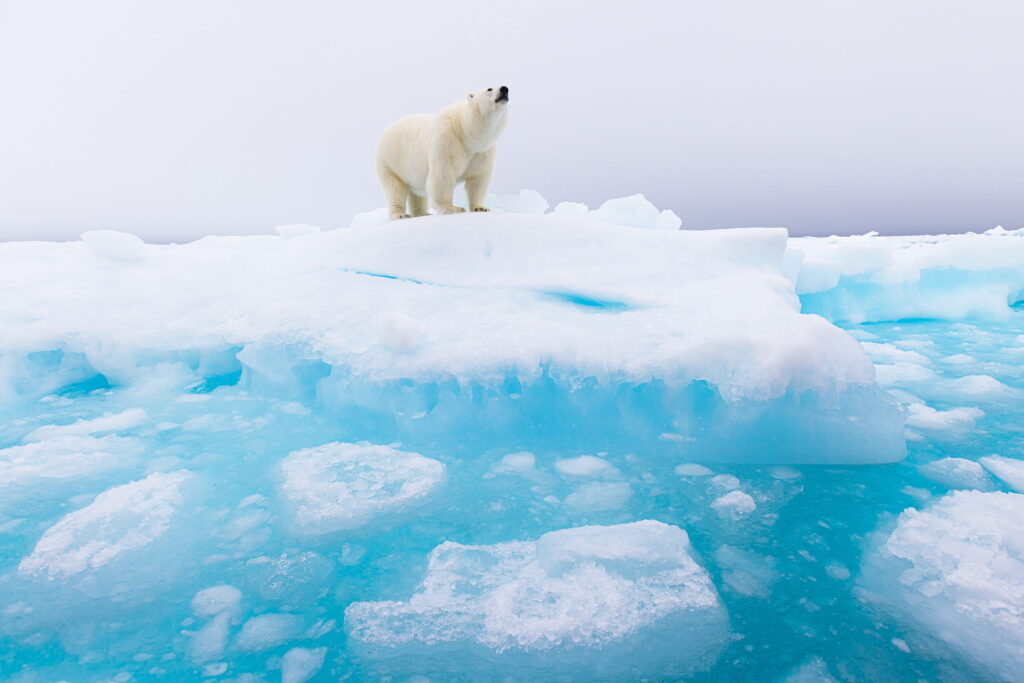
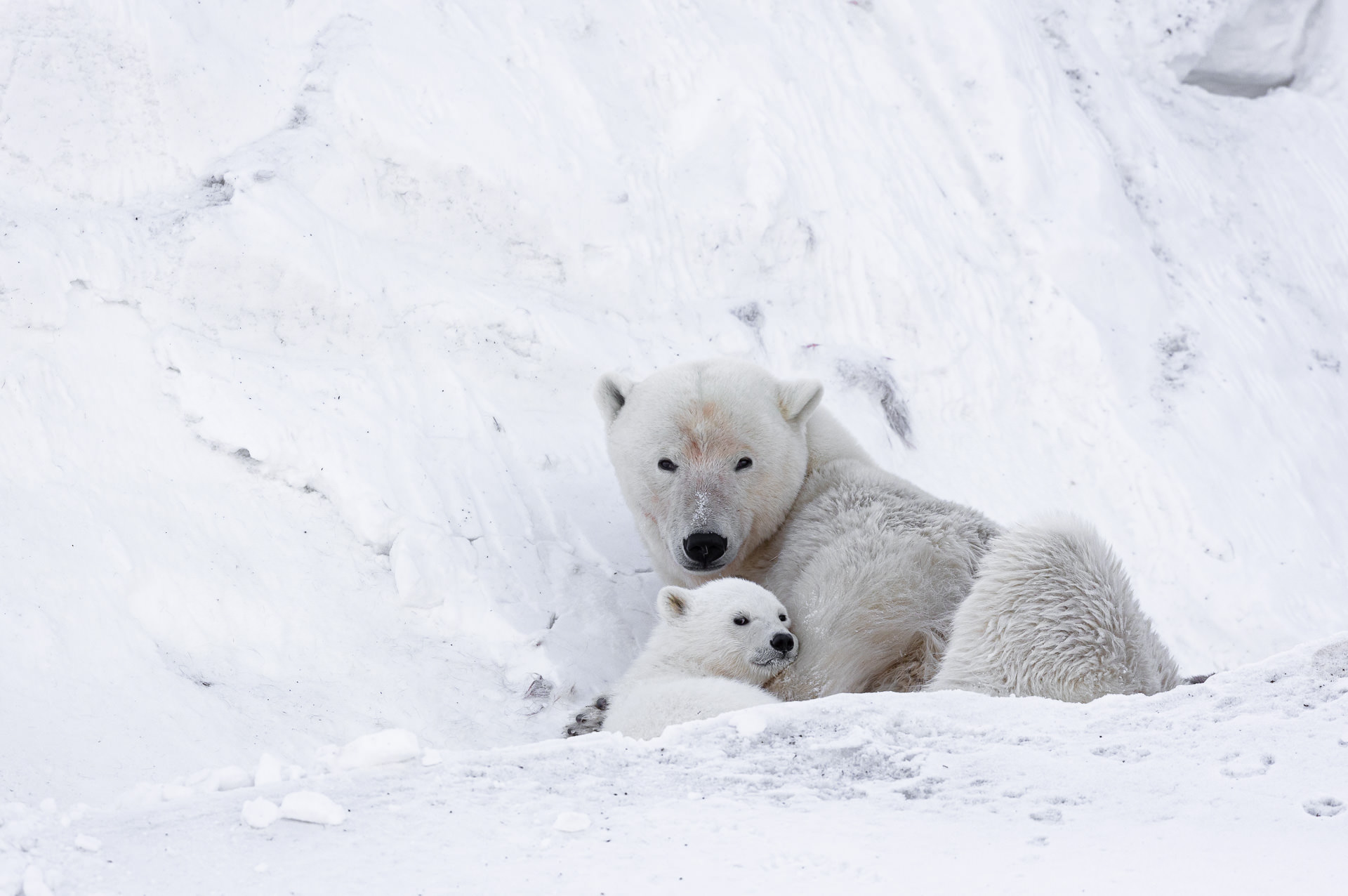
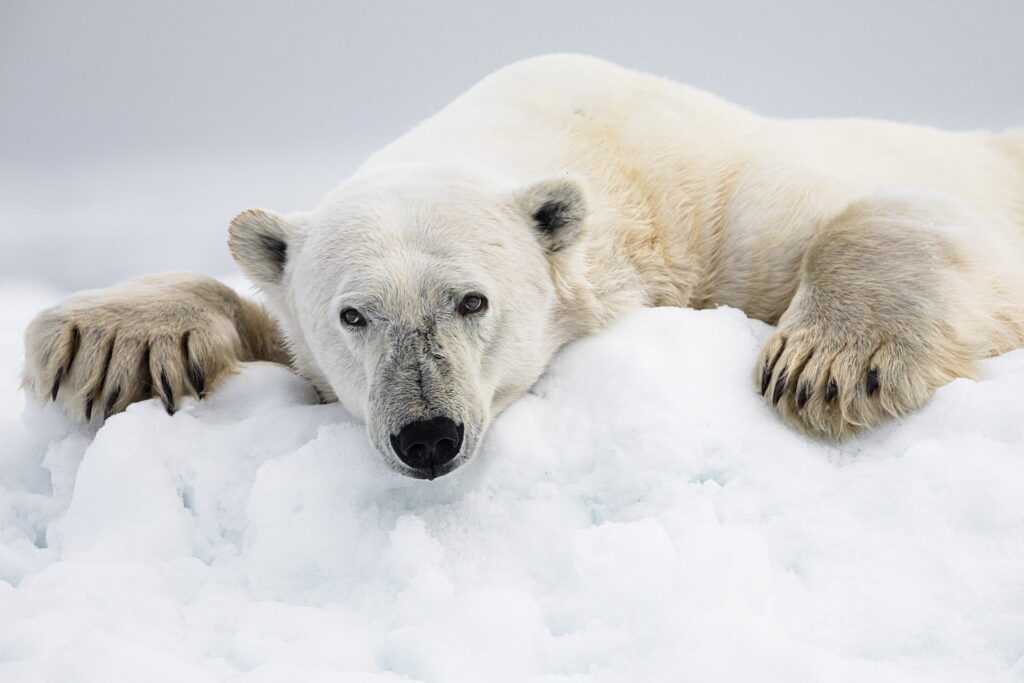
- Polar Bears. In April they spend most of their time on the fjord ice. They often travel along the ice edge, where its possible to observe them both from the ship and from our Zodiac light boats. When they walk along land the beaches are typically frozen and full of snow, granting us a very clean background.
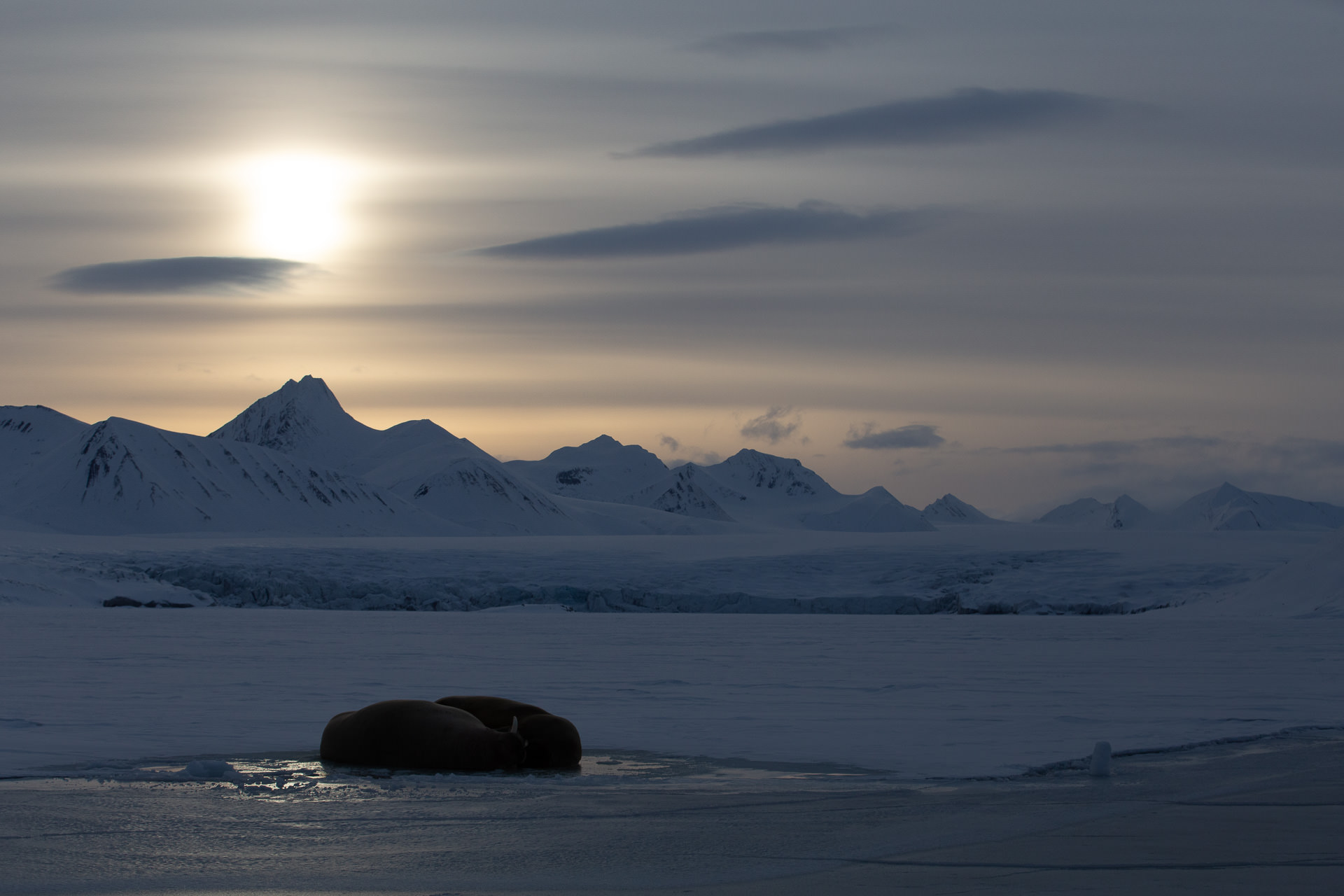
- Walrus. In April they are scattered, and have not yet gone to their summer colonies. We still see many of them, and they are primarily laying on smaller ice floes. This is the season when they may have small pups with them.
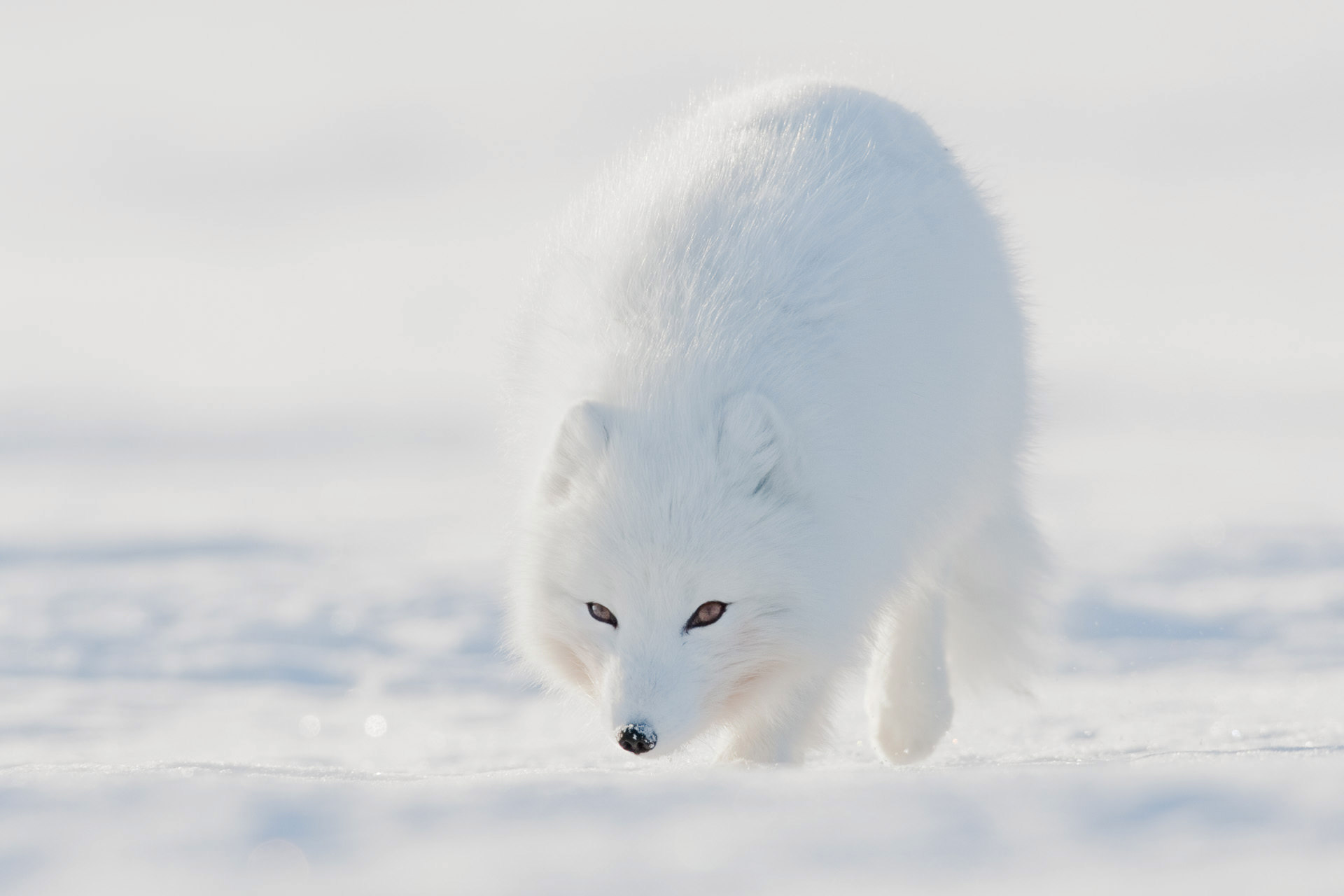
- Arctic Foxes. In April they still have a full winter coat making them very fluffy and white in coloration. Note that some foxes never get white fur, even in winter. Those are called Blue Foxes and are very rare, and special, to see.
- Reindeer. In April they still have their winter fur, making them somewhat whiter and fluffier than in summer. We typically don’t see them too close from our boats in April, but if you have a special interest in reindeer photograpy you can include this in your booking request and we might be able to arrange a land based excursion to photograph them, at an additional cost to your original itinerary.
- Whales. This early in the year very few of the whales have arrived, so if this is a big part of your wishes we recommend that you look further on the summer months of June-August. With this said everything is still possible, and we sometimes encounter Killer Whales in early April. Both Belugas and Bowhead whales are present around Svalbard waters all year around.
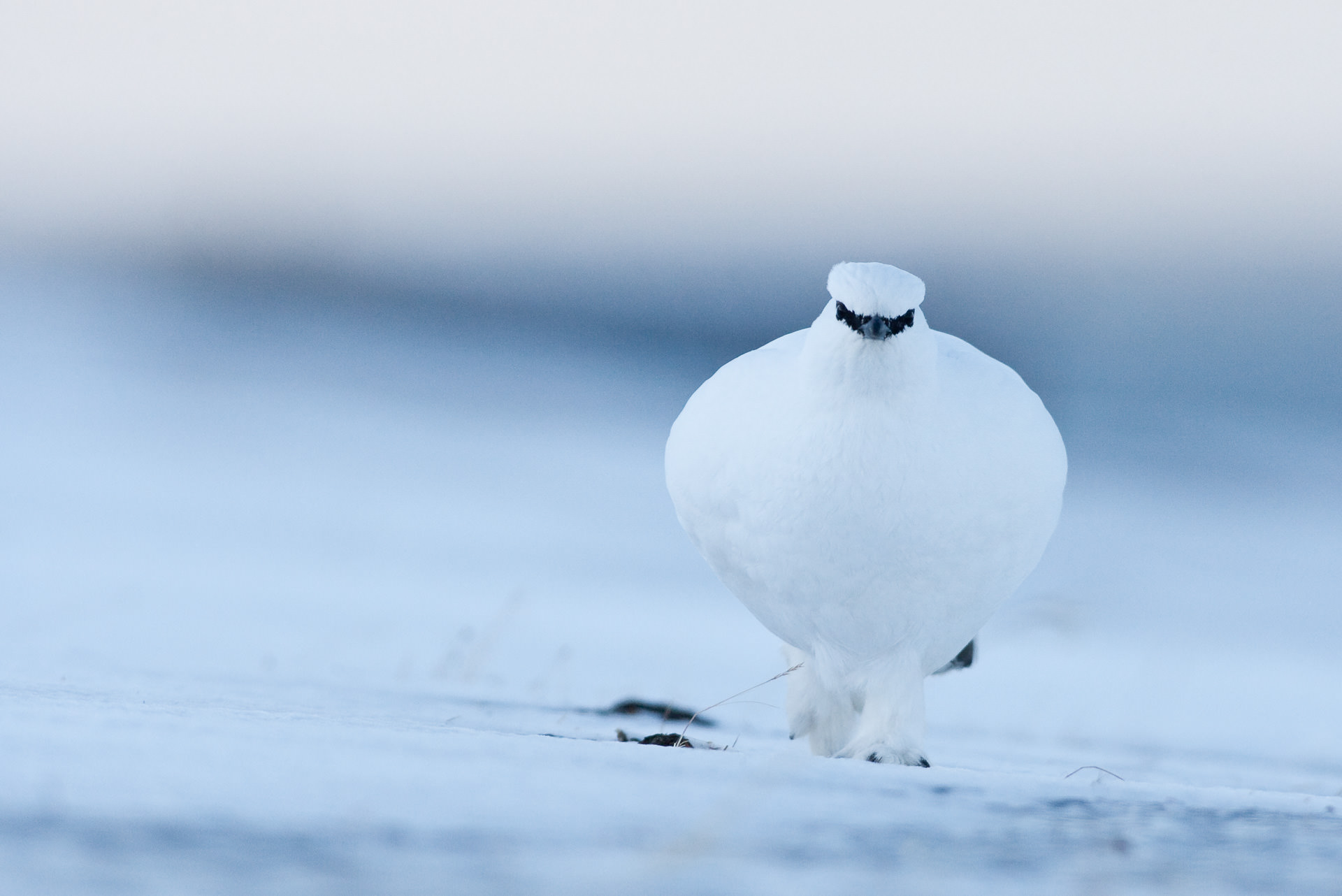
- Seabirds. This early in the year many species, like the Puffins, are yet to arrive from their winter migration. That doesn’t mean that we don’t see any birds, since we still have large numbers of Fulmars, Black Guillemots & Eiders around. April is a very good month for King Eider photography as they are still on the water, before their summer nesting season. In addition we regularly see Ivory Gulls where there is food for them.
Seasons and light on Svalbard - May
May – The end of winter.
By the beginning of May the Svalbard Archipelago is undergoing a swift change in seasons. The midnight sun is here, and summer is not far away. While the fjords are still full of fast ice some regions are starting to get more accessible. As the midnight sun is warming up the high Arctic the temperatures gradually increase. With this in mind you still need to expect temperatures of -10’c during your photography expedition. As the sun doesn’t set we have 24 hour working possibilities. In some regions the sun will hide behind the mountains in the middle of the night, but many regions can be blessed with amazingly rich and soft light. Its truly a good time to experience the seasons and light on Svalbard.
The beaches are still largely covered with ice and snow, giving chances for very clean backgrounds and wintery moods for your wildlife photography.
Following is a short overview of wildlife expectations & behavior for May.
- Polar Bears. In May they still spend most of their time on the fjord ice. They often travel along the ice edge, where it’s possible to observe them both from the ship and from our Zodiac light boats. When they walk along land the beaches are typically frozen and full of snow, granting us a very clean background.
- Walrus. In early May they are still largely scattered, and photography is largely based around drifting sea ice. Later on, towards the end of the month they will start gathering around their feeding grounds and land colonies. In May there are still chances of seeing females with small pups.
- Arctic Foxes. In May they will start to undergo their annual change. The exact timing for this molt is both different from year to year, and can also be quite regional. In most areas they will still have a full winter coat making them very large and white in coloration. In other regions, where there is less snow, they might start molting in late May – giving them a very goofy look.
- Reindeer. In May they still have their winter fur, making them somewhat whiter and fluffier than in summer. We typically don’t see them too close from our boats in May, but if you have a special interest in reindeer photography you can include this in your booking request and we might be able to arrange a land-based excursion to photograph them, at an additional cost to your original itinerary.
- Whales. In the month of May all the whales are yet due to arrive, so if this is a big part of your wishes we recommend that you look further on the summer months of June-August. However, you never know, and sometimes in May we start seeing both Fin whales, Humpbacks and Minke whales. Both Belugas and Bowhead whales are possible to see all year around.
- Seabirds. In May many of the seabirds are starting to arrive to their colonies. Especially the second half of the month is when the Puffins and other species start to arrive for their nesting season in the Arctic.
Seasons and light on Svalbard - June
June – The beginning of summer.
In June the sun is hanging high in the sky as the northern hemisphere is nearing its summer solstice. Even though the sun never sets the light conditions at night are much softer than daytime, and we often work night shifts for our photography sessions.
During this period the melt of the ice starts taking place and more of the extended Svalbard region becomes accessible by ship.
In June all the seabirds have arrived and the cliffs are teeming with Brünnichs Guillemots, Puffins & Little Auks.
Following is a short overview of wildlife expectations & behavior for June.
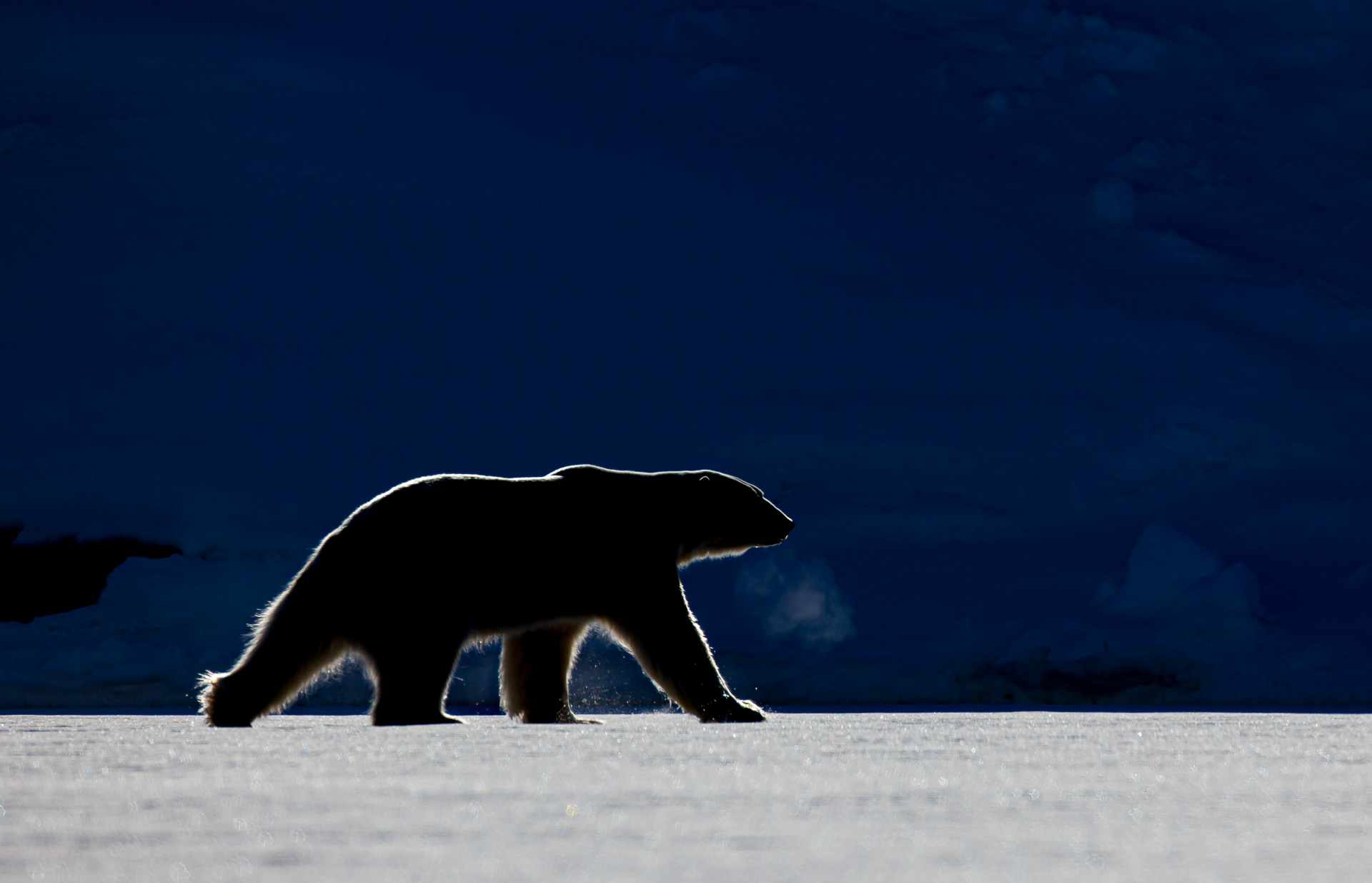
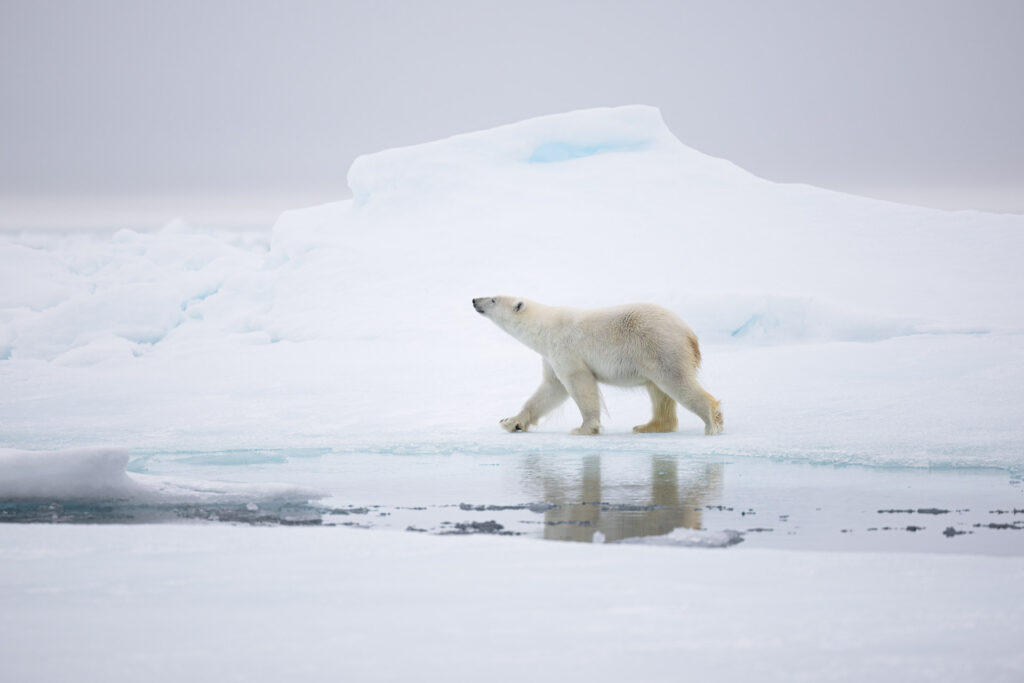
- Polar Bears. In June the fjord ice is starting to break up. This often results in a migration for the Polar Bears as they are starting to move to the drifting pack ice – and we shall follow. In some regions we may observe polar bears that are starting to forage for eggs in bird colonies, and in many cases we start encountering them out on the pack ice. A large difference between pack ice and solid fjord ice is that “the pack” is a three dimensional environment where its more possible to move around according to backgrounds and light for our photography purposes.
- Walrus. In June most of the Walruses have arrived to their summer colonies. During this period we have fantastic opportunities to make landings in specific spots and observe them at close range, around 30 meters, on land. In the colonies there is endless activity and we often have photo sessions with walruses that are playing around in the waterline on the beach. We still have chances to observe single walruses on ice floes, as they regularly travel long distances for their feeding forays.
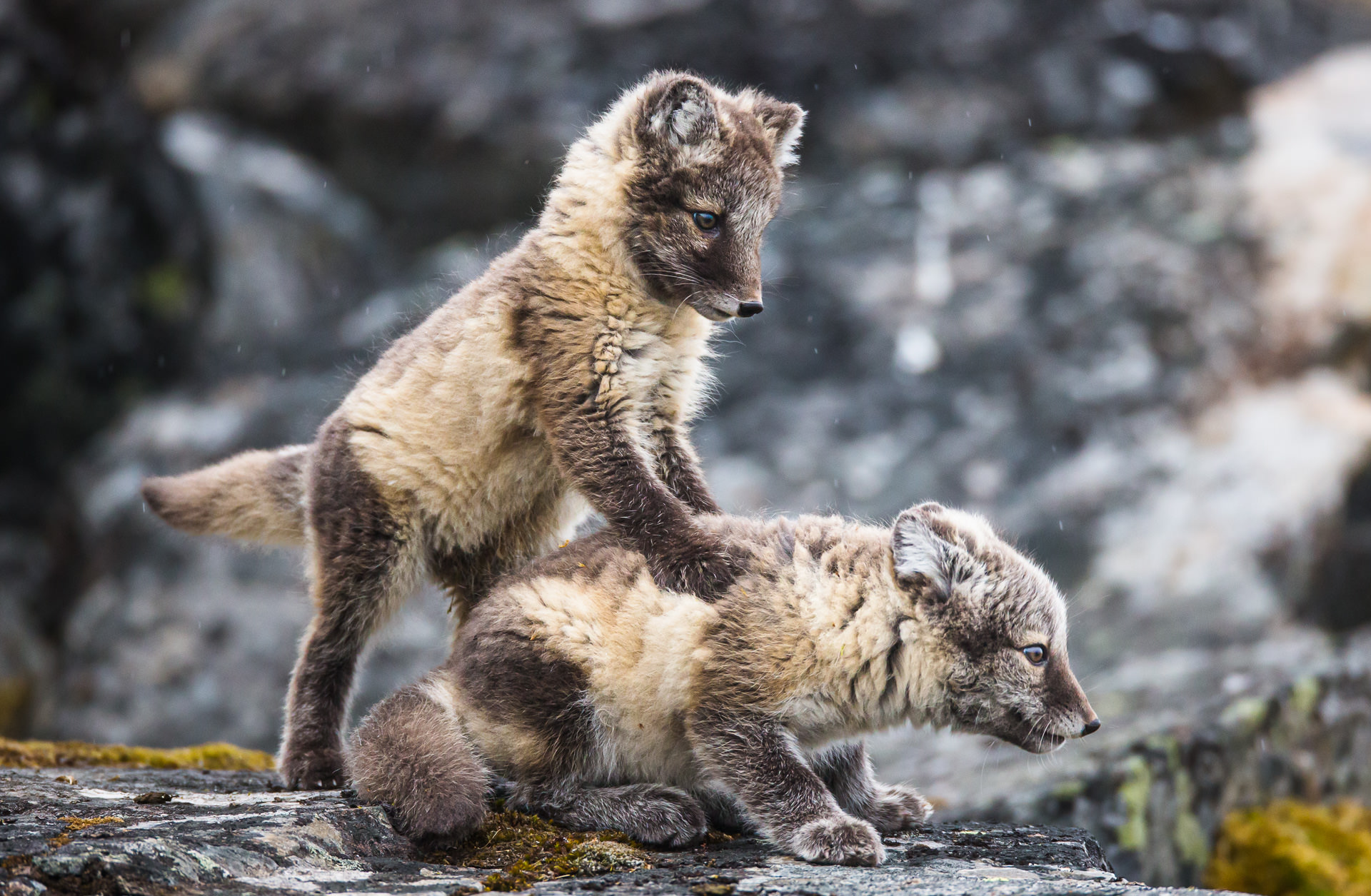
- Arctic Foxes. In June most of the Arctic Foxes either are fully molted or are in the process of doing so. We start seeing them more and more running in the hillsides, searching for birds and eggs, and also often encounter them on the last areas with fjord ice as they are scavenging food from Polar Bears.
- Reindeer. In June the reindeer is molting into their summer coat, and become slightly darker and look a little slimmer. This is also the period when they give birth to their calves. In some regions, as the snow disappears from the tundra, we can start to make landings and short hikes to see them. These reindeer are very relaxed and we can often photograph them at nice proximities of between 40-75 meters.
If you have a special interest in reindeer photography the region around Longyearbyen is one of the best on the island. You can include this in your booking request and we might be able to arrange a land based excursion to photograph them, at an additional cost to your original itinerary.
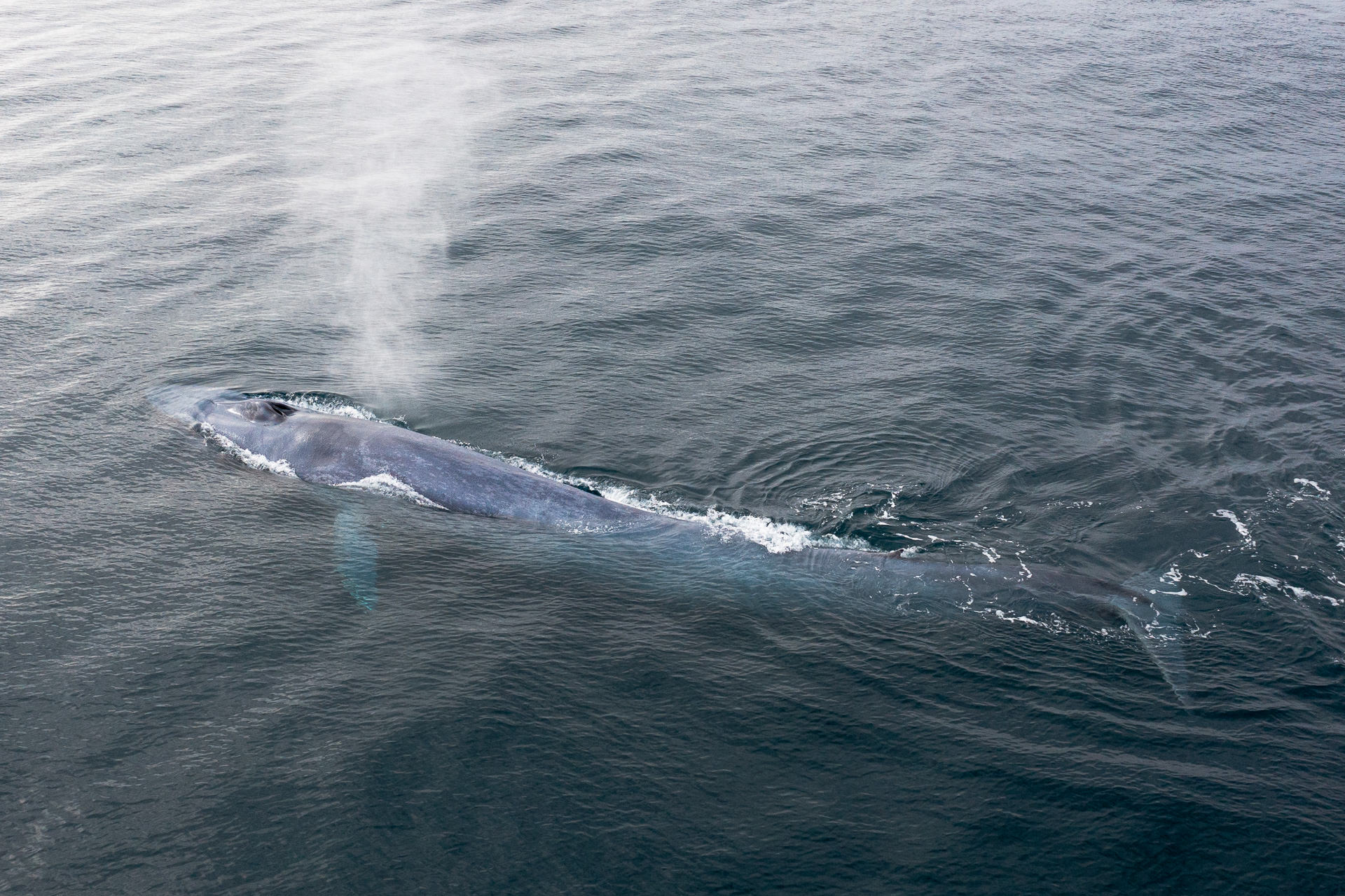
- Whales. By this time many of the large baleen whales have arrived to the high arctic for their summer feeding season. In the fjords along western Spitsbergen and in the Hinlopen Strait, to the north, we tend to encounter both smaller Minke Whales and larger species such as Humpbacks, Fin Whales and even Blue Whales – the largest animal that has ever lived on planet earth.
- Seabirds. In June all the seabirds have arrived to Svalbard. On a calm day the fjords will be full of Guillemots, Puffins & Fulmars, and in the cliffs the activity is immense. In this period we will start to get opportunities to visit “Alkefjellet” which is the largest bird colony in Svalbard with well over 100.000 guillemots nesting, surrounded by the most spectacular scenery.
Seasons and light on Svalbard - July
July – The height of summer
By July most of the fjords are clear from fast ice, and much of Svalbard is accessible. The pack ice tends to sit around 80 degrees North and still surrounds the north-eastern part of the archipelago. As the sun has its solstice in late June we start seeing more soft colors in the light from the midnight sun already just a week into the month of July. July and August tends to be the warmest months of the year.
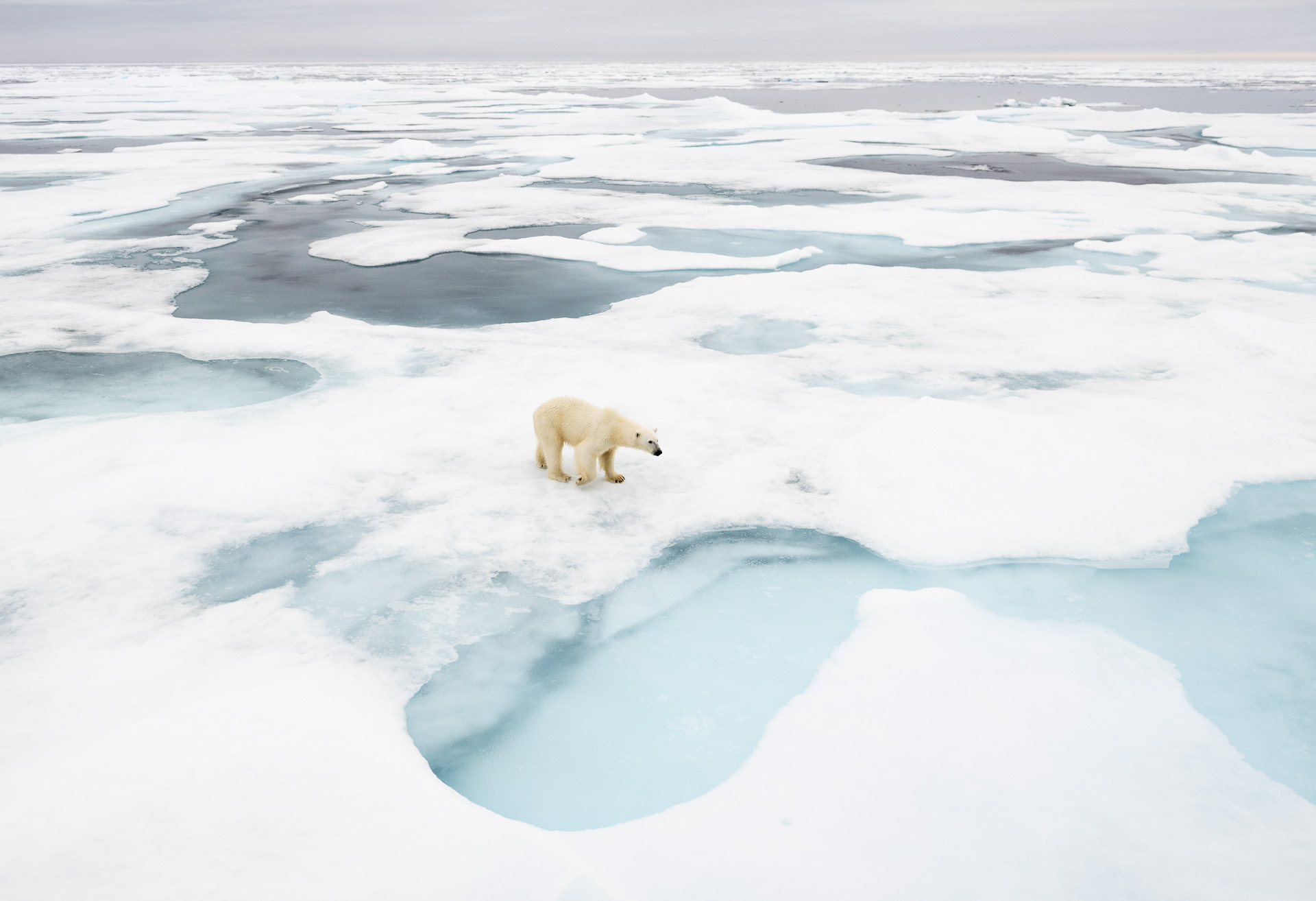
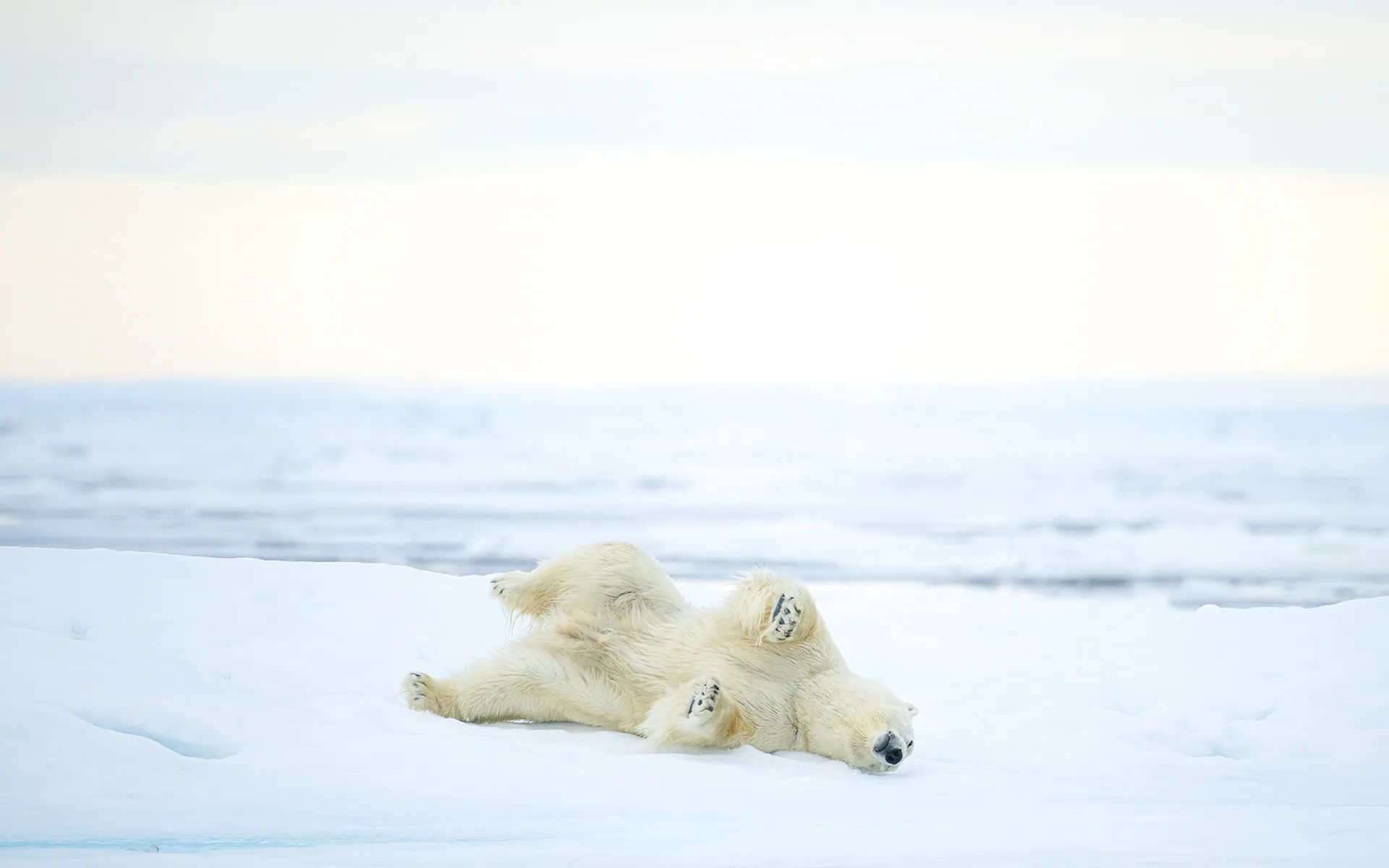
- Polar Bears. In July the fast ice in the fjords is all but gone. By this time our expeditions often sail a bit longer, up to the pack ice, to encounter these animals in their natural environment. In coastal areas we often see polar bears on small islands as they are foraging for eggs and chicks from a number of different bird species.
- Walrus. In July the walruses are busy in their feeding season and are very accessible in as many as 40 different summer haul-out sites. For photogenic purposes we still meet many animals resting on ice floes in the northern and eastern parts of Svalbard. At this stage all the female walruses have brought their pups with them and migrated east towards “Kvitøya” – “White Island”.
- Arctic Foxes. In July all the foxes are in their summer coating, and are also just about to bring their newborn babies, the kits, out from the dens. In certain places we can make landings to photograph these adorable little canines at close range, with green backgrounds.
- Reindeer. In July the reindeer are all fully moulted into their summer coat. At this stage of the season the male reindeer, the bucks, have all grown large and impressive antlers. By July almost all the snow is melted and we are often able to make landings and short hikes to see them. These reindeer are very relaxed and we can often photograph them at nice proximities of between 40-75 meters.
If you have a special interest in reindeer photography the region around Longyearbyen is one of the best on the island. You can include this in your booking request and we might be able to arrange a land based excursion to photograph them, at an additional cost to your original itinerary.
- Whales. Same as June. By this time many of the large baleen whales have arrived to the high arctic for their summer feeding season. In the fjords along western Spitsbergen and in the Hinlopen Strait, to the north, we tend to encounter both smaller Minke Whales and larger species such as Humpbacks, Fin Whales and even Blue Whales – the largest animal that has ever lived on planet earth.
- Seabirds. In July the birds are busy with their newborn chicks all around Svalbard. On a calm day the fjords will be full of Guillemots, Puffins & Fulmars, and in the cliffs the activity is immense. We regularly see geese and eiders with large groups of chicks, both on the tundra and on the water. With the right amount of patience, and a bit of luck, you might be able to see foxes or glaucous gulls predate on the chicks.
Seasons and light on Svalbard - August
August – the end of a short summer
In August we are really coming into the golden light period. As the sun is going in longer and longer circles you still have endless days, but the hours at night can provide you with some breathtaking scenery. The first actual sunset is on August 25th, but already 2 weeks before our local star is moving very low along the horizon around midnight.
The pack ice is now further away, and we regularly extend our travelling distance to spectacular regions such as “Sjuøyane” – “The Seven Islands” and sometimes even to “Kvitøya” – “The White Island”.
Most of the seabirds are still here, and many of the cliffs are very busy. Even so, our seabirds are programmed by daylight and will eventually begin their southern migrations in the later part of the month.
Seasons and light on Svalbard - September
September – the first days of autumn
If your main interest is amazing light, but you don’t want to come in the cold month of April, September is the time for you.
Every evening can yield a sunset, and golden light may be plentiful. Even though we are coming in towards autumn and the sun is gradually setting we still have very long days. The first day where we have official “night” is on September 12th. This also marks the first day of the year where its reasonably possible to see the Aurora Borealis.
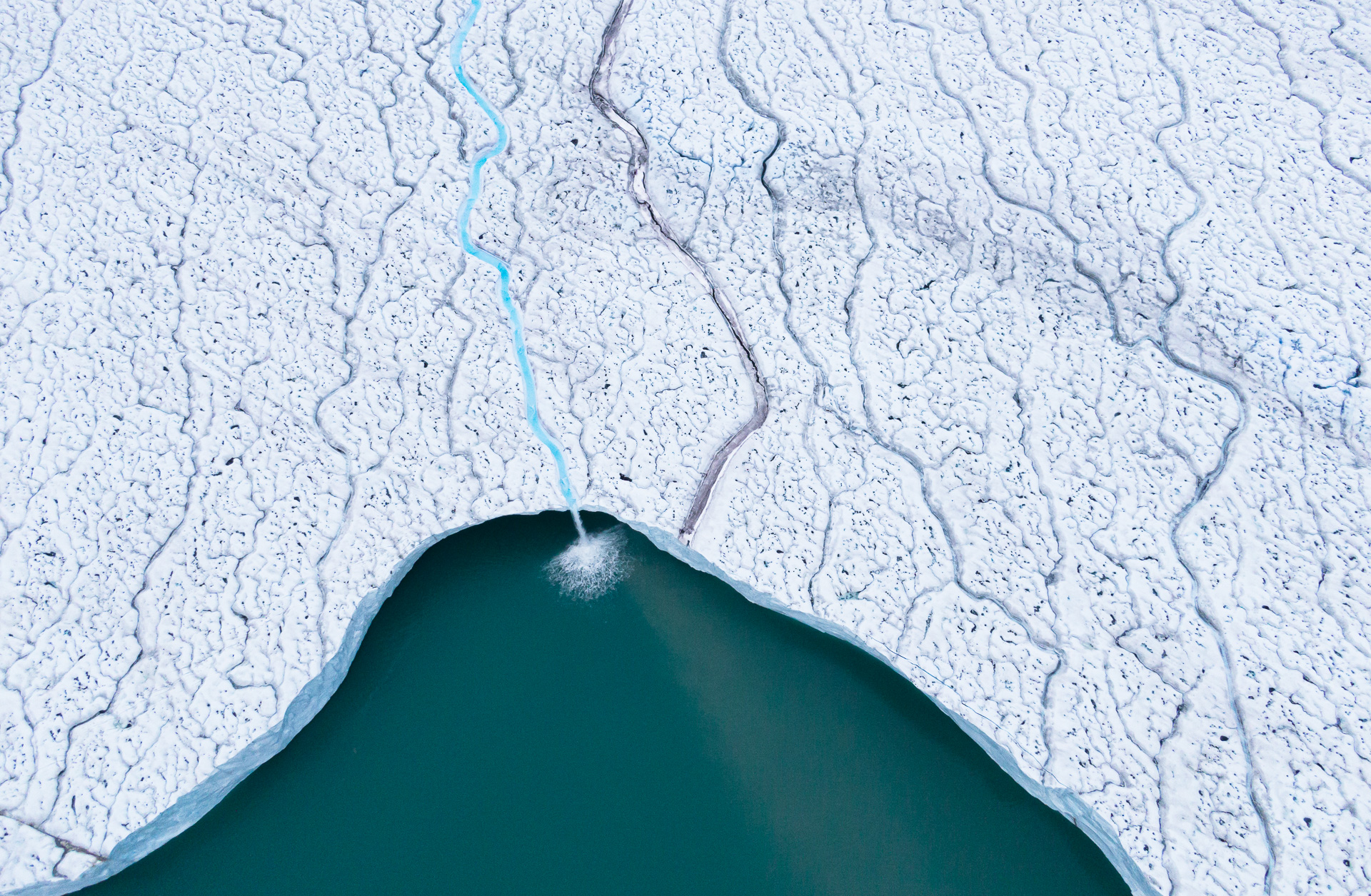
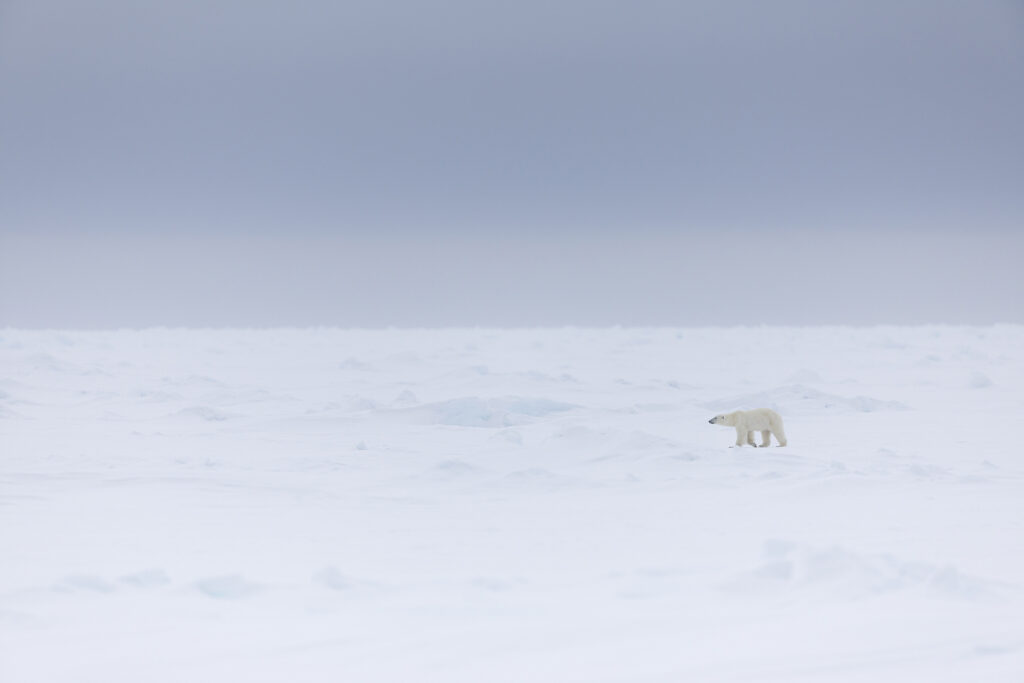
The autumn is the period with the least amount of ice in the fjord systems, but on the eastern islands and on the pack ice in the north we still have regular polar bear encounters and great photo opportunities.
By this time many landing restrictions on assorted islands are lifted and grants us further possibilities for landings with walruses and sightseeings with polar bears that are otherwise not an option.
Following is a short overview of wildlife expectations & behavior for September.
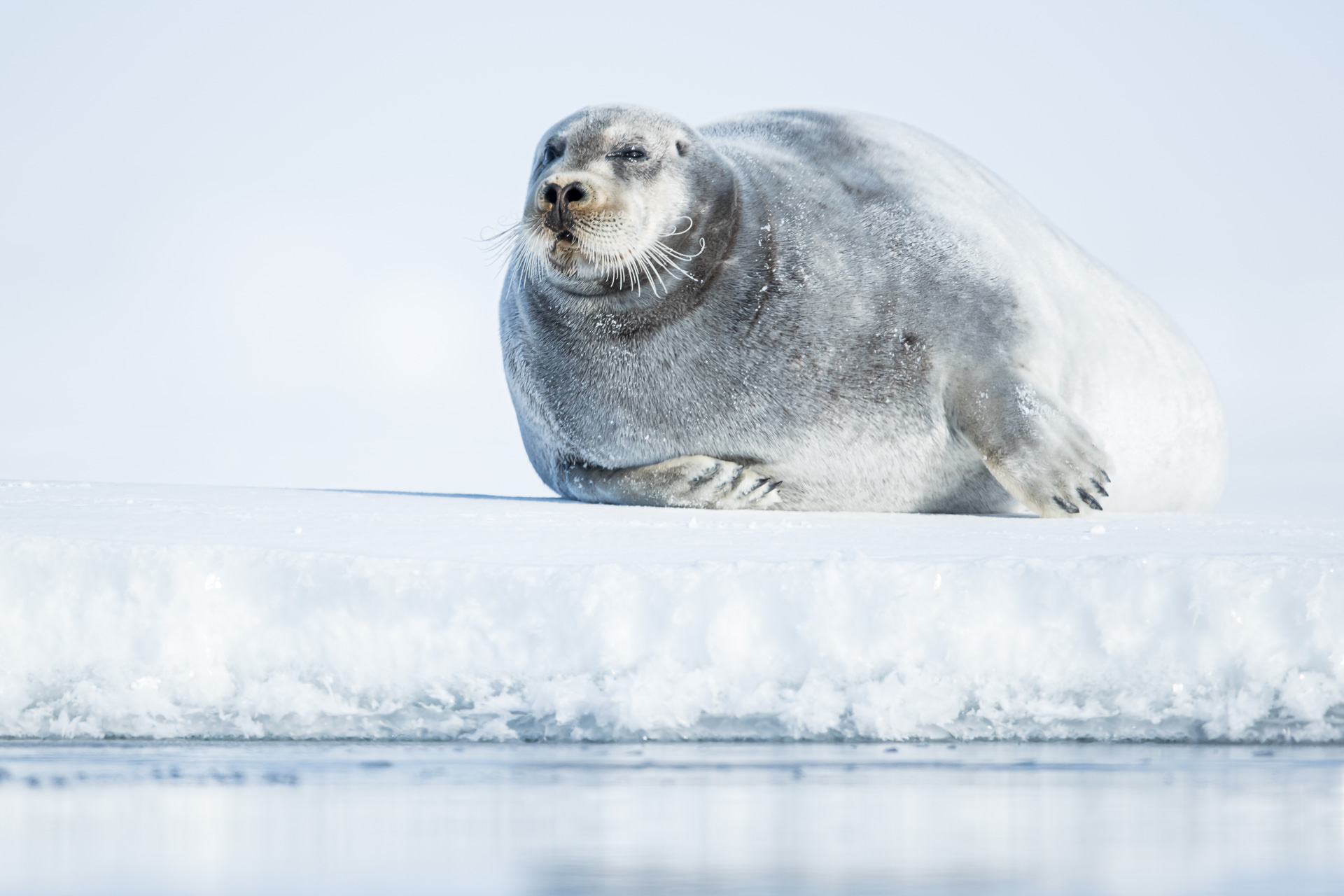
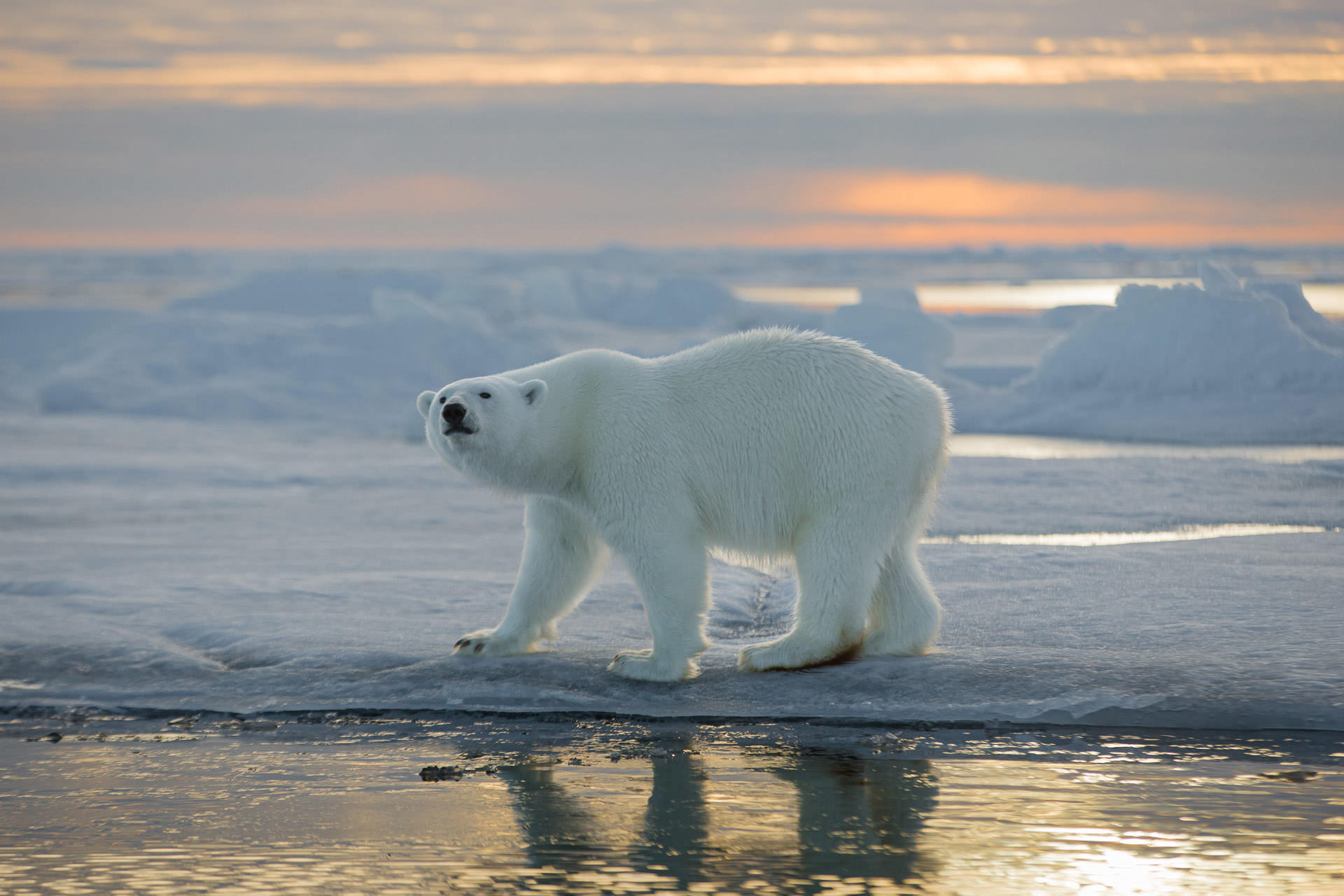
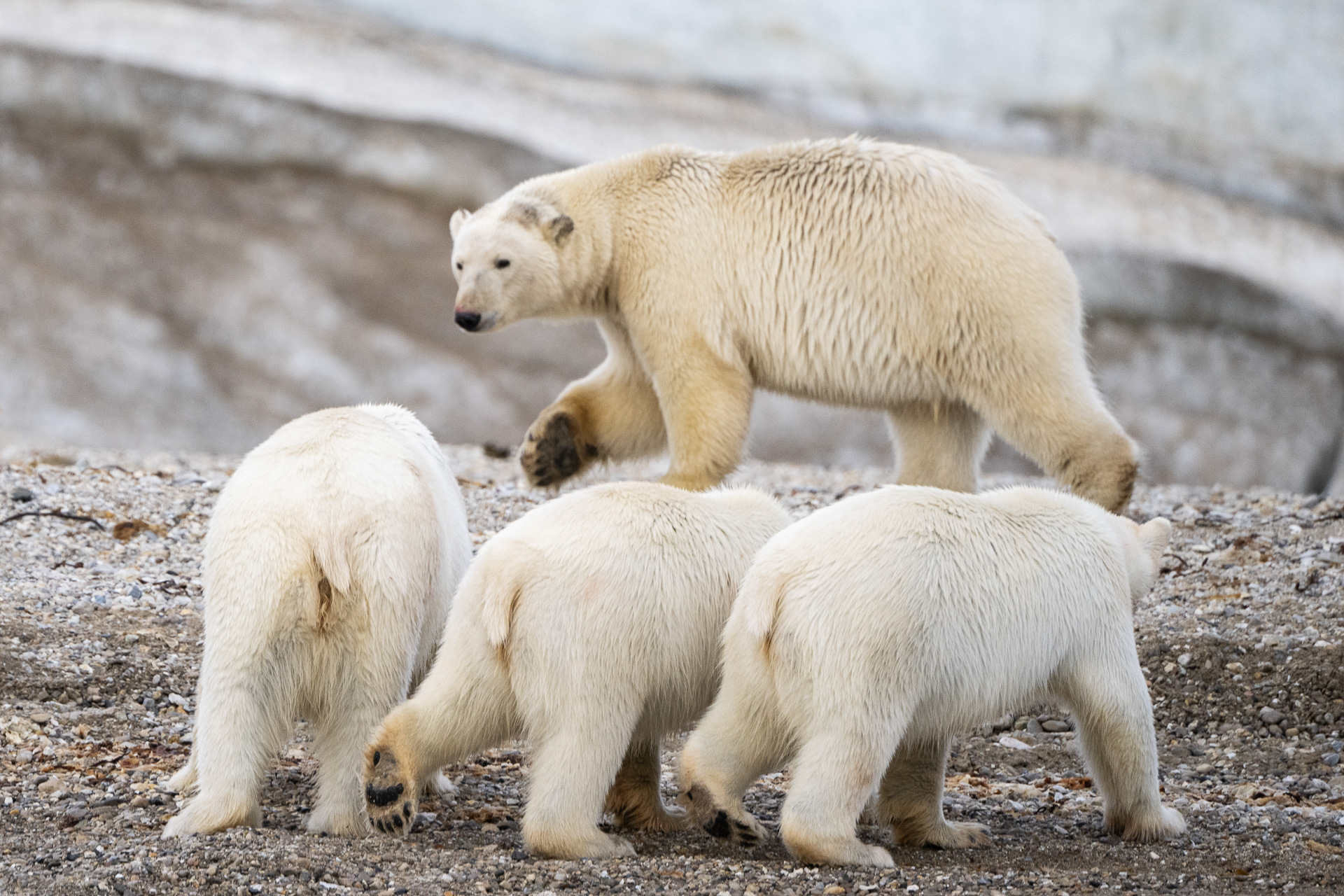
- Polar Bears. Same as August. In September all the fjords are clear from fast ice. That, absolutely, does not mean that we see less bears – only that we see them more in the pack ice. At this stage of the season the seabird colonies no longer contain eggs or small chicks. This makes the bears focus more on bearded seals, displaying a hunting technique called “aquatic stalking”. On a very lucky day, or night, you might see a Polar Bear climb up on a blue iceberg that has calved from one of our many glaciers.
- Walrus. In September most of the walruses have performed their northern migration. Especially from the colonies in southern Svalbard. We still have several colonies to the north where we can see dozens, or hundreds, of animals on land. In addition we also see many animals around on the pack ice, especially in the far eastern regions of the archipelago.
- Arctic Foxes. Same as August. In September the foxes are still in their summer coat, and all the kits have weaned and left the den. This can lead to an increase in observations, as many animals are running along the beaches and in the hills in search of food and territory.
- Reindeer. In September the male reindeer are starting to lose their antlers. During this process they scrape them on the ground, sometimes leading to reindeer with huge, blood red, antlers on their heads. In September there is no snow on the tundra, and we are often able to make landings and short hikes to see them. These reindeer are very relaxed and we can often photograph them at nice proximities of between 40-75 meters.
If you have a special interest in reindeer photography the region around Longyearbyen is one of the best on the island. You can include this in your booking request and we might be able to arrange a land based excursion to photograph them, at an additional cost to your original itinerary.
- Whales. In September many of the whales have begun their annual migration south towards warmer waters. Even though we still have excellent chances to encounter Beluga whales and Bowheads the sightings will be fewer than during the summer months. If whales are a big part of your Arctic Wildlife Tour we recommend that you visit us in the period from June to mid August.
- Seabirds. The fulmars & guillemots are here for longer periods of the year, so there is no difference for these species. By the month of September most of the puffins have left the Svalbard archipelago, but a few stray animals often stay behind a bit longer.
Upcoming Svalbard Tours
Svalbard winter photography
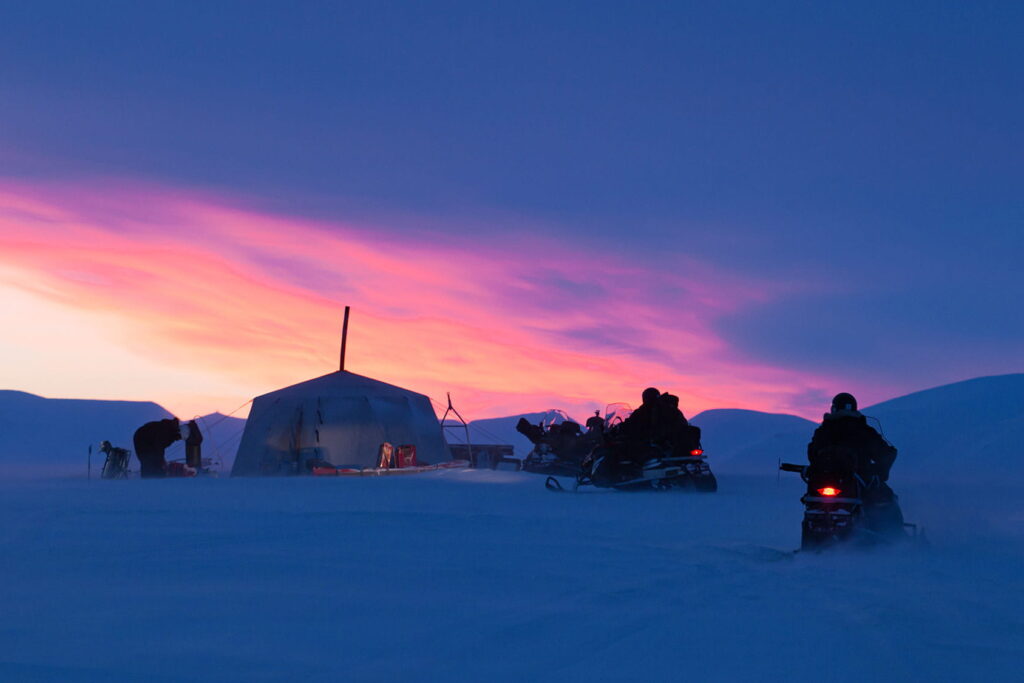
Arctic Winter Photography by Snowmobile
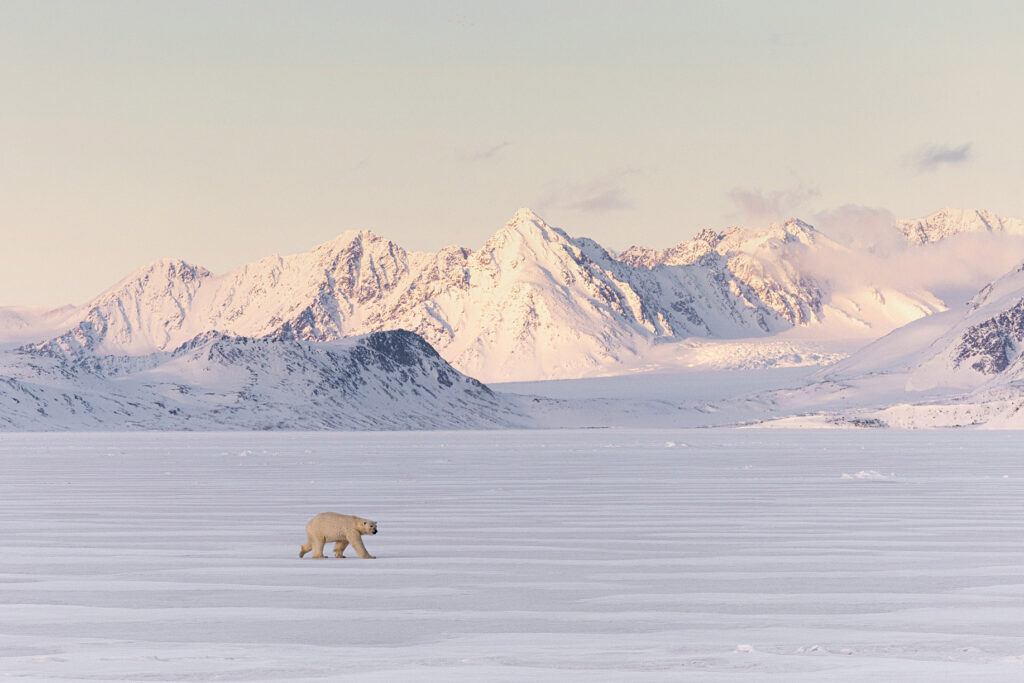
Early Pack Ice expedition
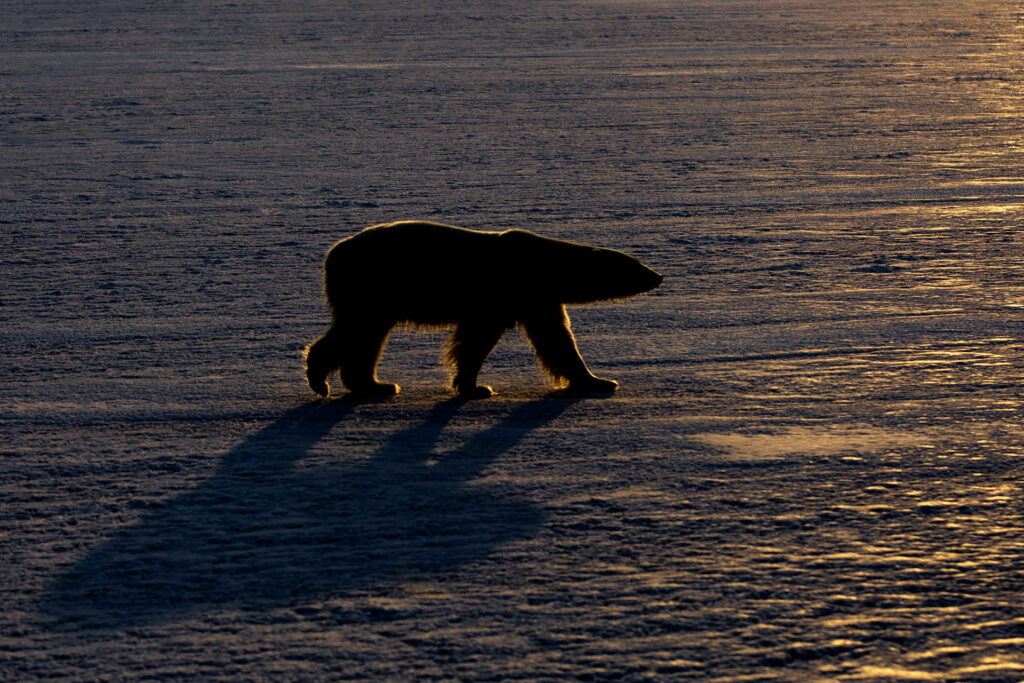
Early Pack Ice photography expedition
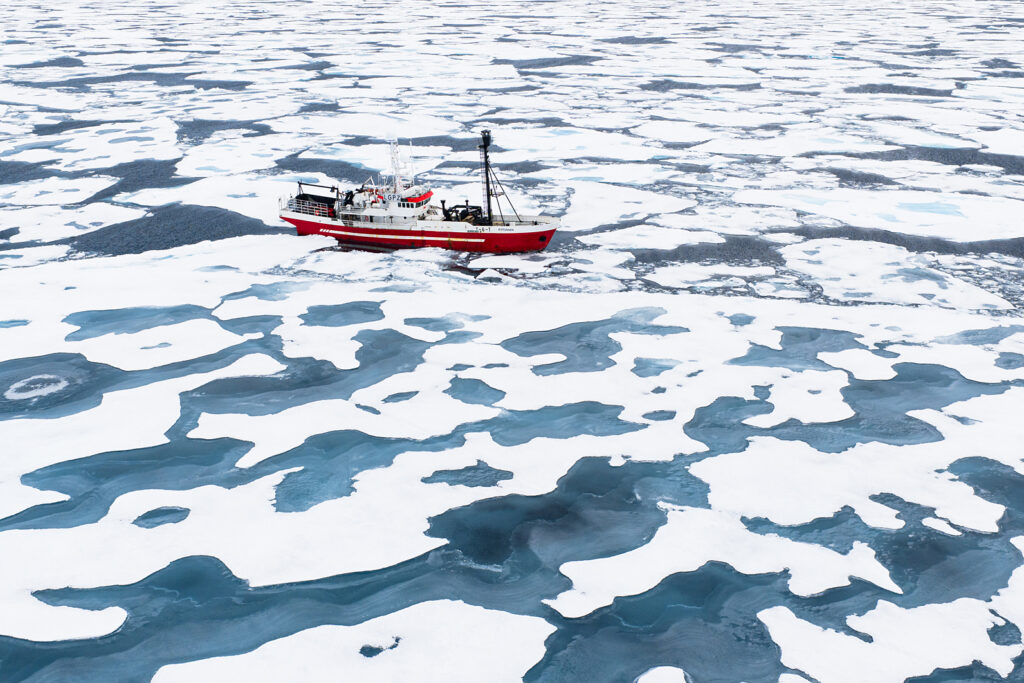
June Pack Ice Expedition#2
Pack Ice Expedition South Svalbard
Svalbard June-July Pack Ice
Svalbard July Pack Ice