Polar Bear Behaviour
Polar Bear behaviour
Polar Bears are extraordinary animals. Almost nothing looks like it is normal about them; nothing the same as other animals on this globe. They are extreme adapted to survive some real hash environments where the open oceans meat the ice in Polar habitats. On our tours we have seen more than 1000 polar bears since we started tours in 2010. We can’t say we are experts on how they behave, but nearly.
The sea bear.
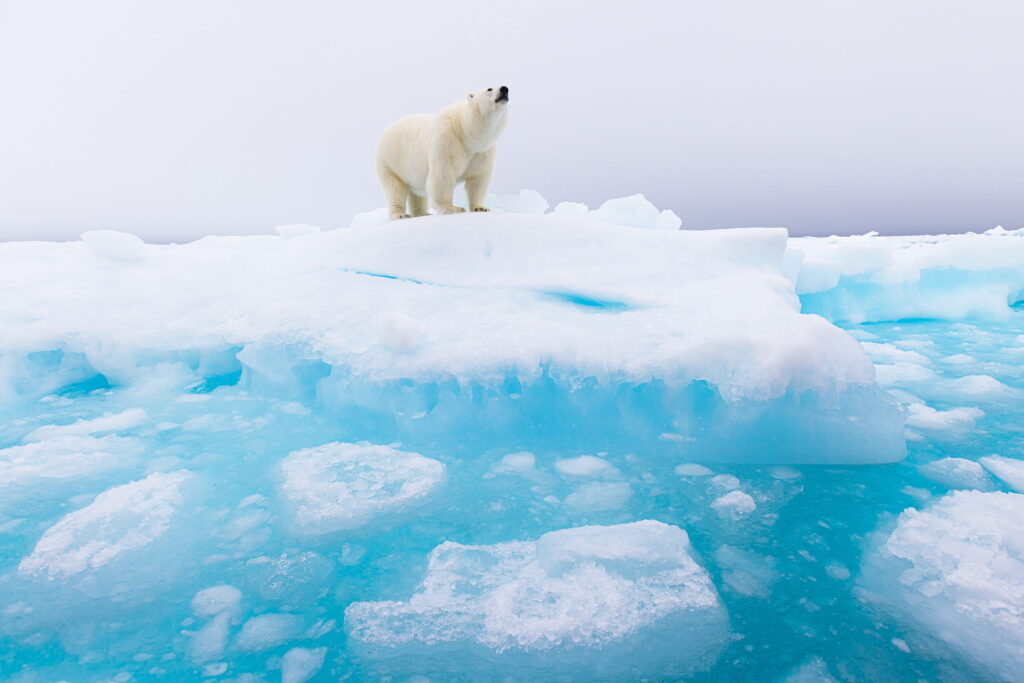
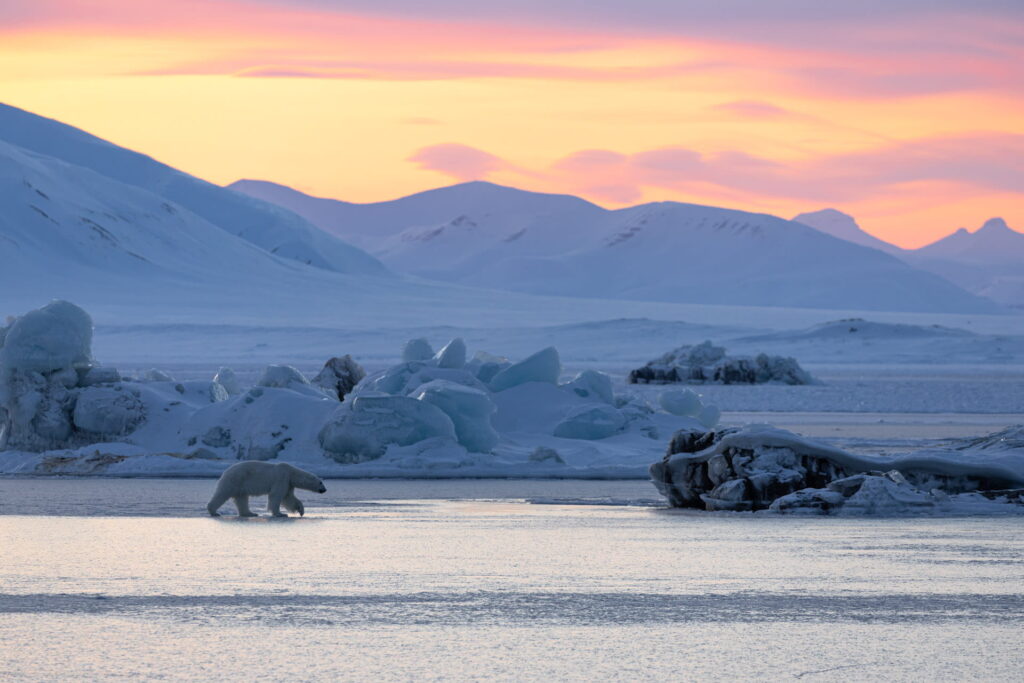
Ursus maritimus means «sea bear,» and this is exactly where polar bears are usually found – near the active zones where sea ice and open water meat. These are areas that remain ice-free throughout the winter, and it is in these areas where the larger marine mammals, such as whales and seals, congregate to feed. It is the ultimate areas for polar bears. A typical place for this could be on the ice edge in a frozen fjord on Svalbard og in northern parts of Canada. It could also be where the ocean meet the drifting and heavy ice covering the top of the globe.
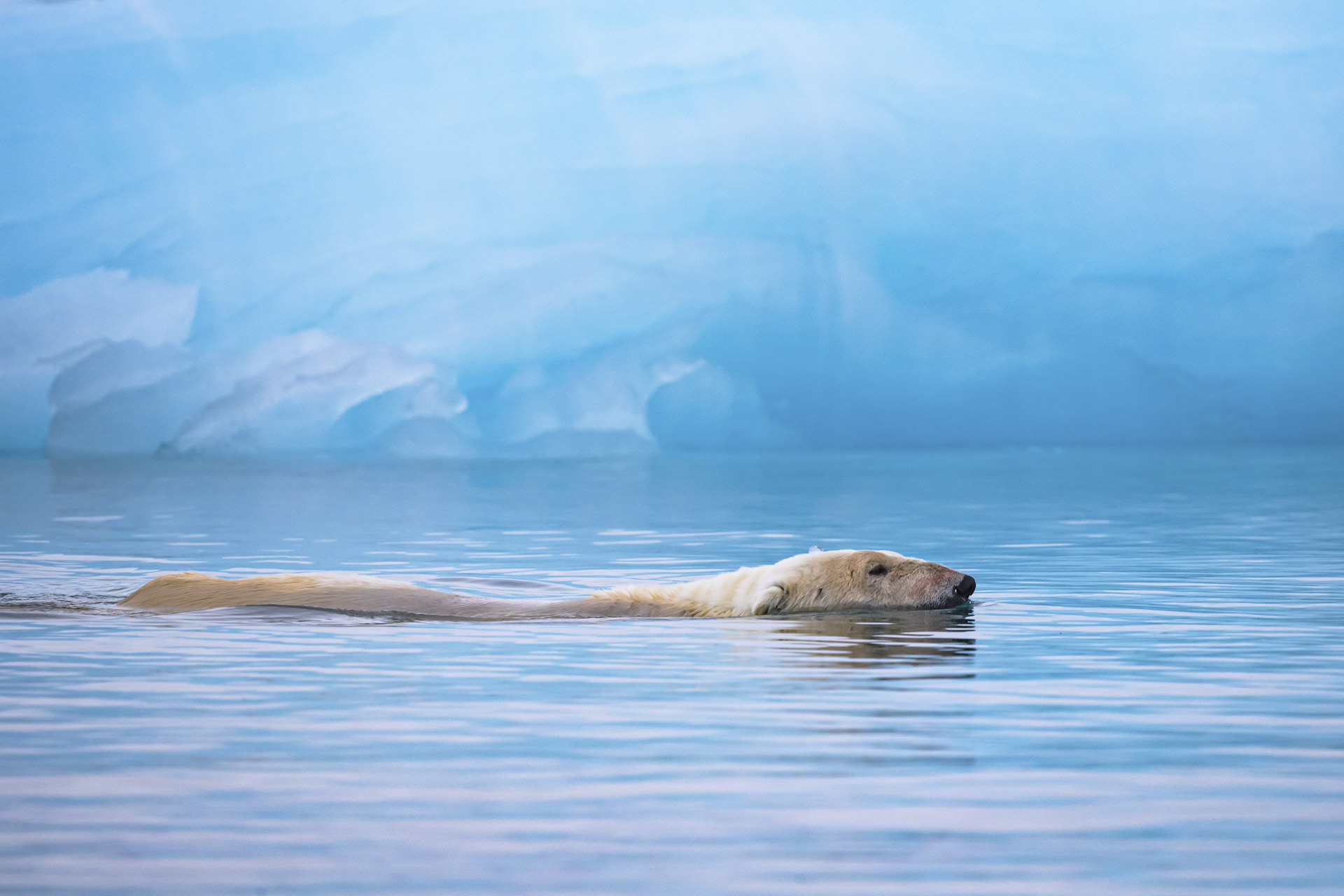
Polar bear behaviour includes that they are excellent swimmers. When entering the water, a bear may carefully slide in backwards from the edge of an ice floe, or it may just leap in headfirst. Using only their fore – paws as flippers, they can swim at an average speed of about ten kilometers per-hour up to 100 km without resting; these big white bears have been seen on ice floes 150-200 km offshore. When emerging from the water, the bear usually shakes itself like a wet dog.
Polar bears seem to enjoy swimming and are excellent divers as well. They can remain submerged for up to two minutes. While under water, their ears are flattened and their nostrils are closed, but their eyes remain open. In the wild, they may occasionally hunt seabirds by diving and coming up underneath them. They may also take crabs and other shellfish from the shallow sea floor.
Strong but inefficient walkers.
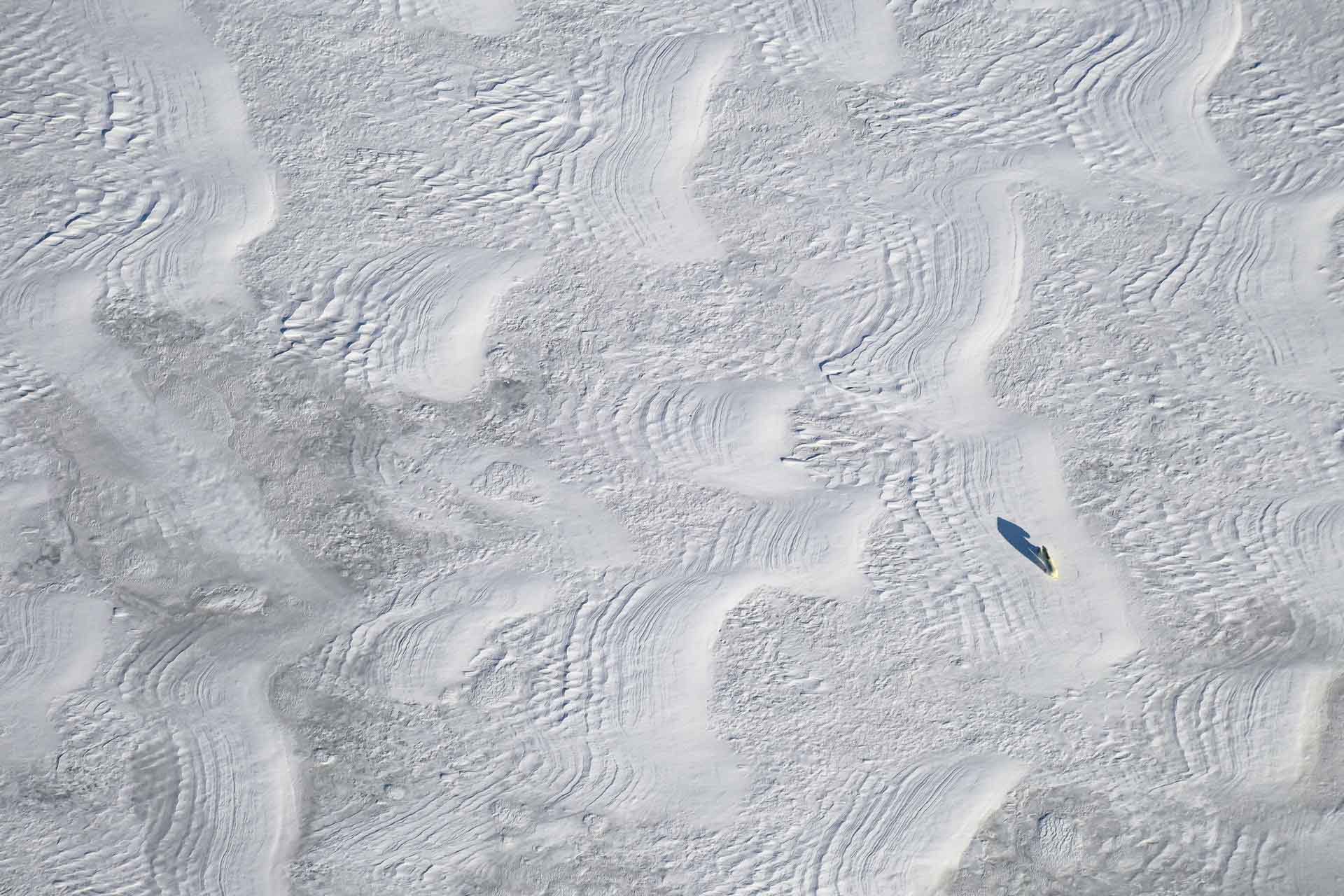
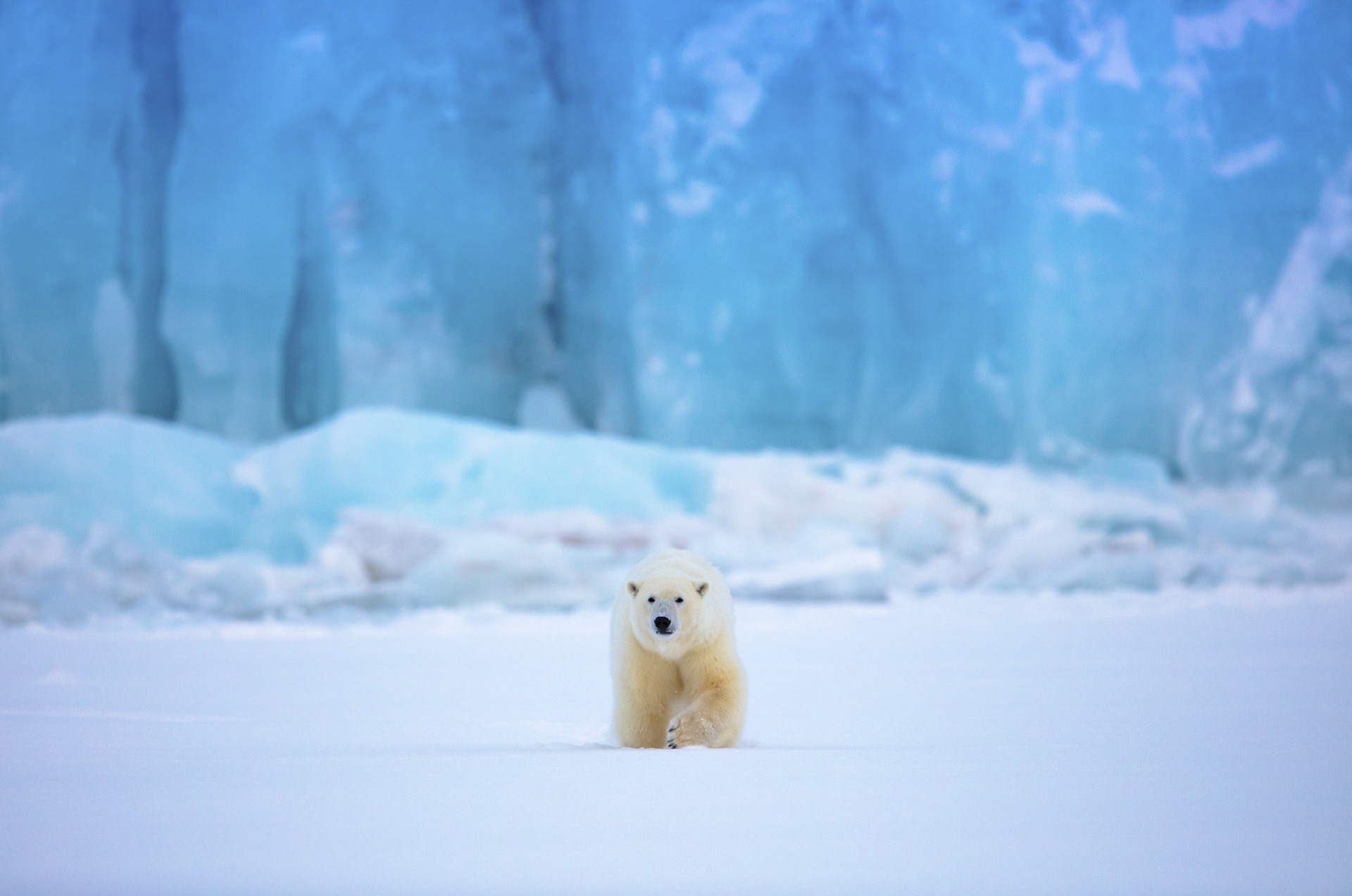
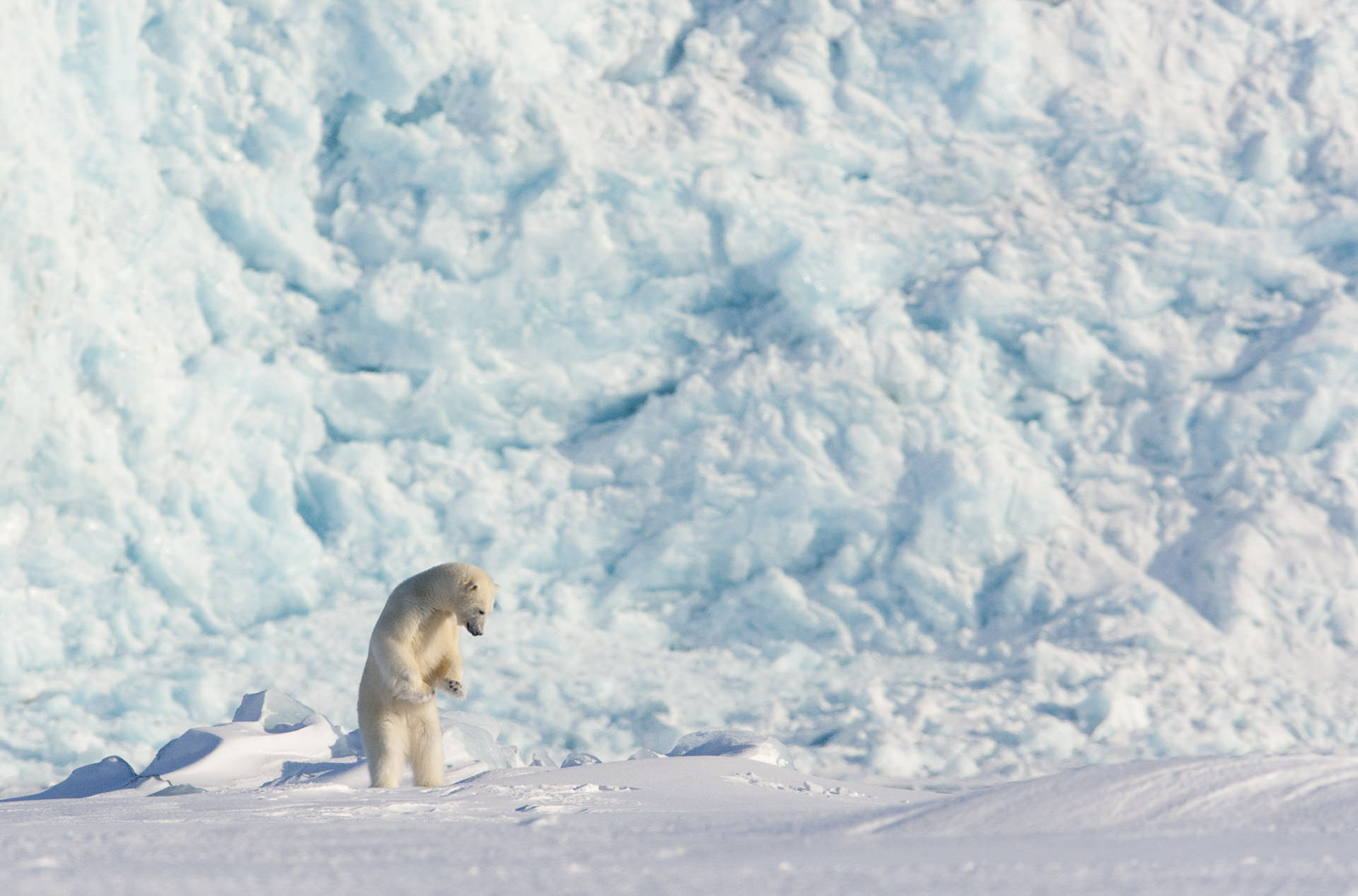
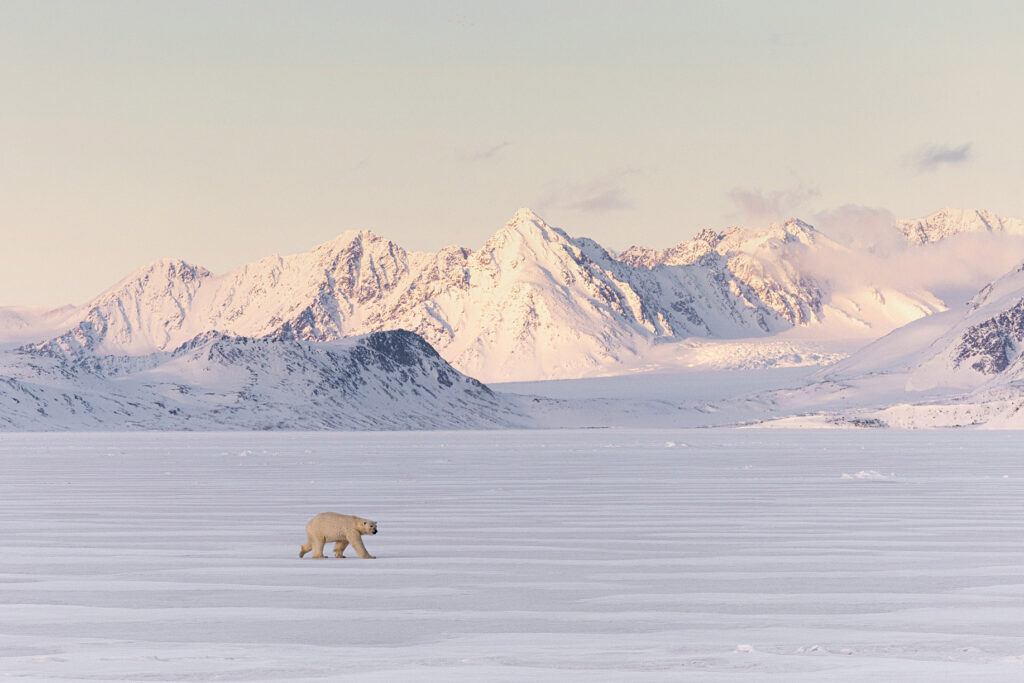
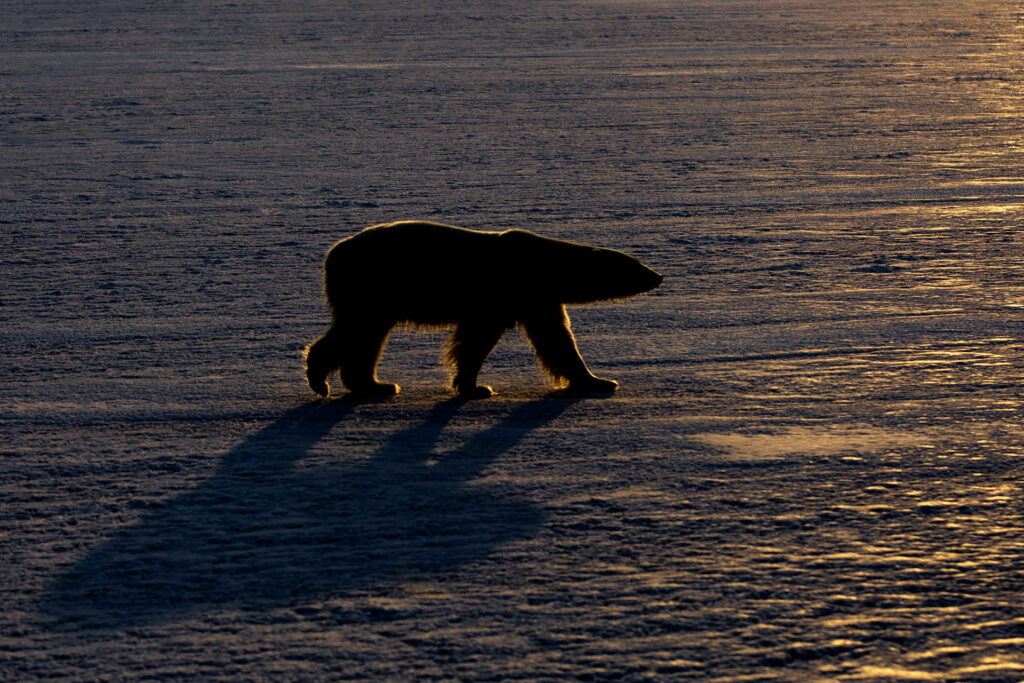
Polar bears are great travelers, walking huge distances every year. Their wide paws allow them to move through deep snow, but to save energy, they prefer to travel on a solid surface, like ice or bare ground. Polar bears have also been seen climbing steep ice cliffs and ‘sledding’ down hills on their stomachs. They are very inefficient walkers and require up to twice as much energy to walk as would be expected for other mammals their size. Their massive legs and the whole structure of their build is probably the reason for that. Evidently, the trade-off is to be able to have these massive forelegs in order to break through seal dens or to flip a 300-pound seal out of the water with one paw.
Hunting techniques.
A common hunting technique for polar bears is to wait patiently by a seal’s breathing hole in the ice. Bears have been seen waiting motionless by a hole for up to 10-15 hours. When the seal sticks its nose through the hole for a breath of air, the waiting bear springs forward and grabs the animal’s head in its jaws, trying to kill it. In a show of incredible strength, the bear will stand up with the seal’s head still firmly clamped in its jaws and pull the seal out of the water through its small breathing hole. An adult seal may weigh from 60 to 200 kilogram. Sometimes the breathing hole may only be eight to ten inches in diameter, while the seal may be half a meter or more in diameter.
Polar bear behaviour means exciting moments where we can expect the unexpected from polar bears.
Another hunting technique involves quietly stalking a resting seal. When out on the ice, a seal becomes extremely vigilant, staying close to the water and waking from its nap every 20 to 30 seconds to look around. Lowering its head, the seal goes back to sleep for a few more moments before again raising itself to examine its surroundings. Each time the seal drops its head, the polar bear inches itself slowly forward, instantly freezing when the seal raises its head. The stalk eventually ends in a wild charge, when the bear suddenly springs up and bounds forward over the last few yards to grab and disable the seal before it can slip into the water.
Sometimes a polar bear will stalk a resting seal by swimming very slowly toward it. When close enough, the bear will submerge, swim to the edge of the ice lead where the seal is resting, and then explode from the water, cutting off the seal’s escape route.
Seals are the main pray.
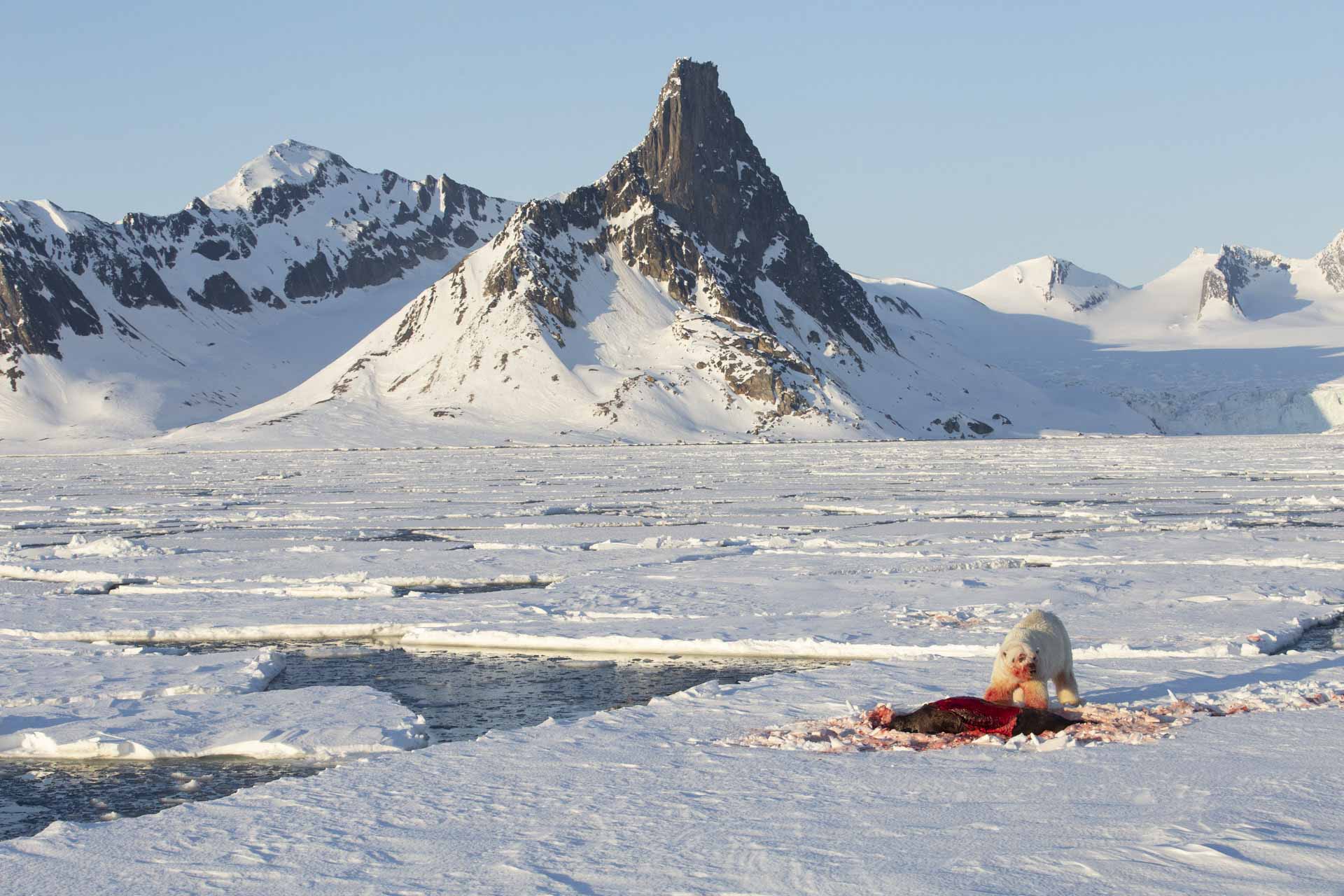
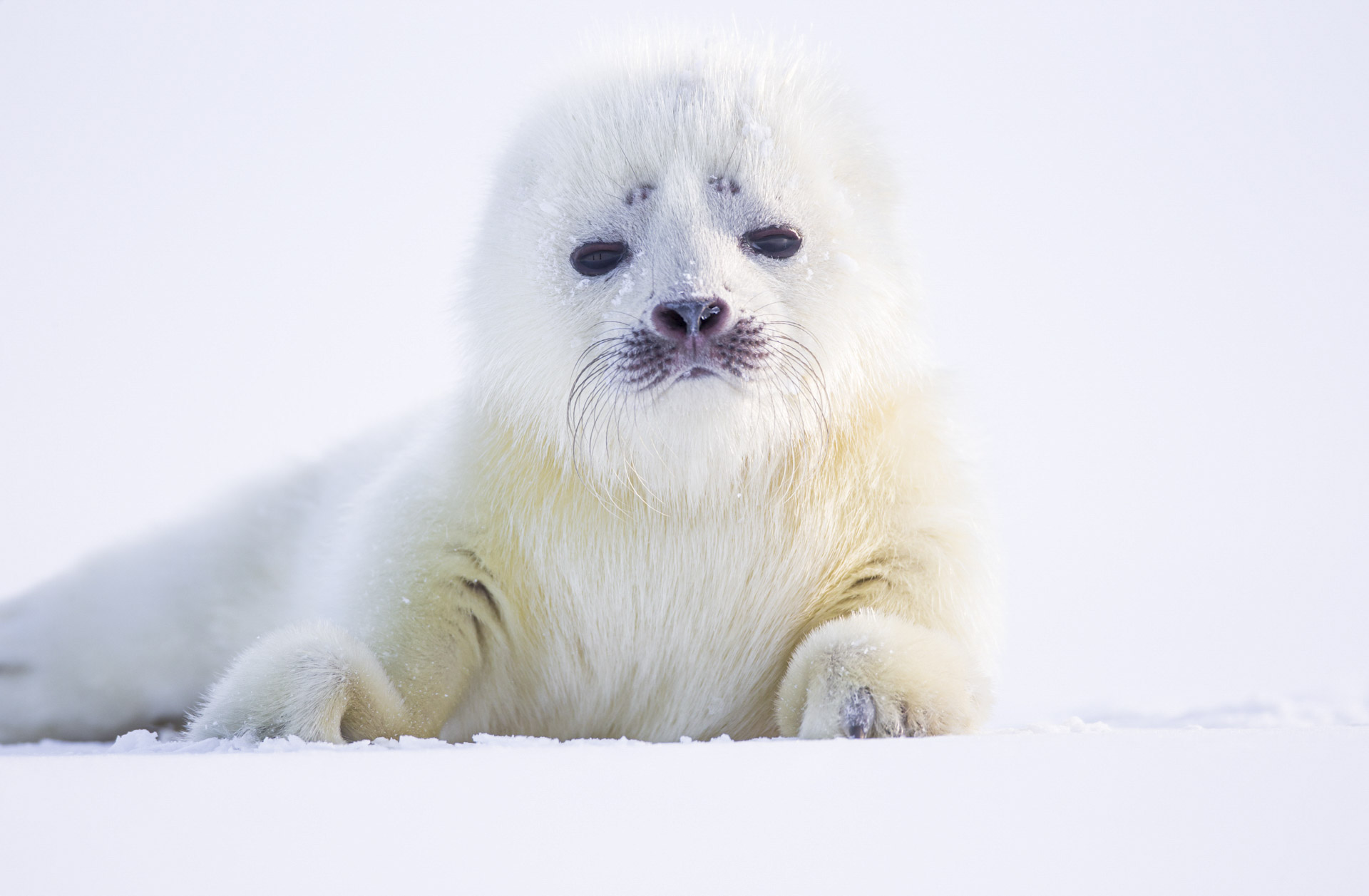
During the spring, about half the seals killed are newborn pups. Late in the winter, the seals’ breathing holes become covered with snow. If the snow becomes deep enough, the seals will carve out an “igloo” on the ice directly above the breathing hole, where they will rest and give birth to their pups. A polar bear can sense the exact spot in the seal’s chamber where the breathing hole is located. When a bear crashes through the snow roof of the den, it is nearly always right at that spot. Overall, fewer than 15 percent of a polar bear’s hunts will be successful. Individual hunting success depends on ice conditions and time of year. The success rate varies greatly.
Intelligence.
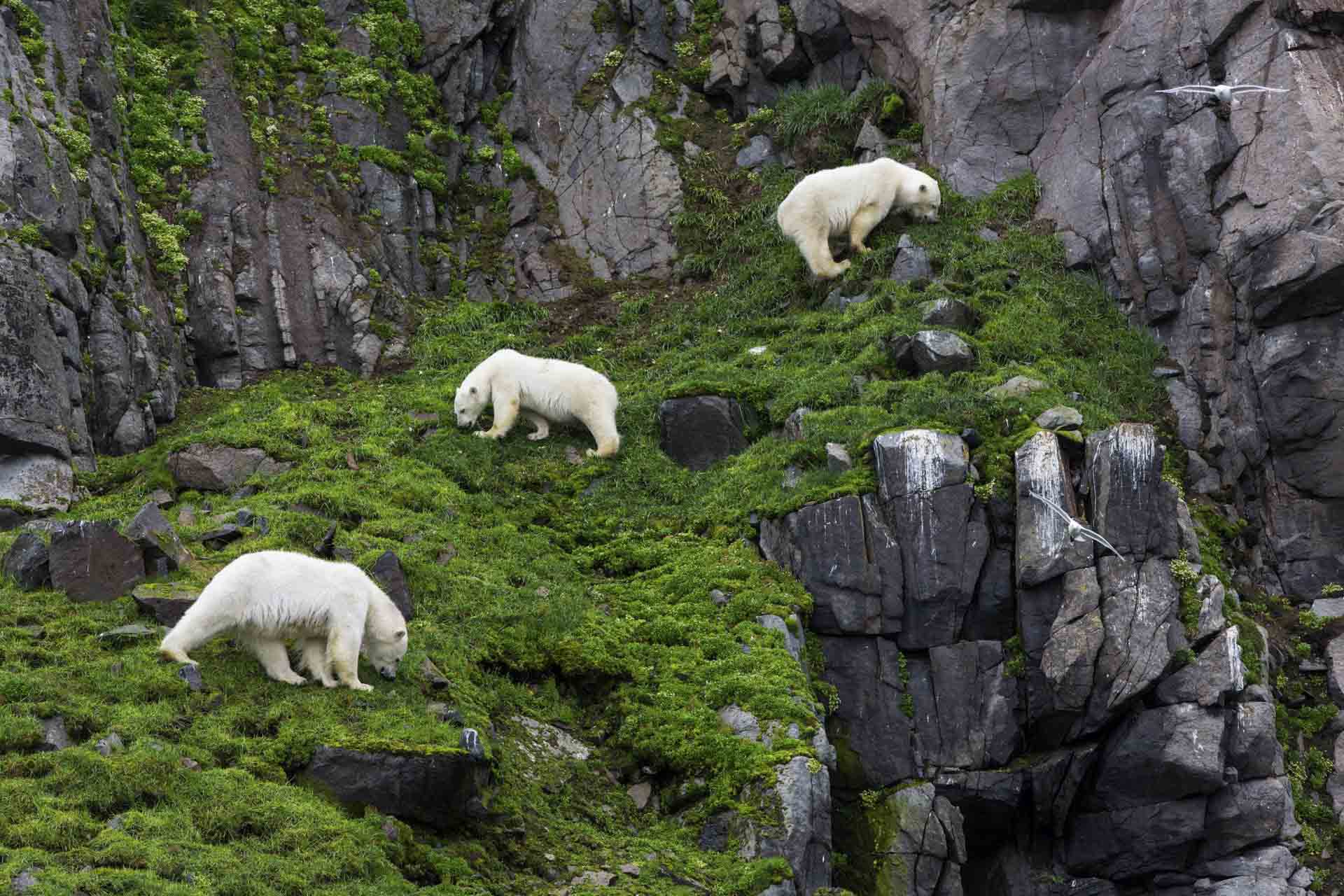
Like nearly all bears, polar bears exhibit a remarkable range of behavior. Eskimo folklore recounts stories of the bears covering their dark noses with a paw or a piece of snow to keep from being seen while stalking a seal on the open ice. Other observers have seen bears use blocks of ice to break into seal igloos in order to reach the seal pups. Dr. On our expedition on Svalbard especially, we have seen hunting behavior which looks extremely adapted to the situation. Polar Bears even hunt reindeer and harbour seals up there from land. They are in our opinion extremely intelligent and able to adapt under changing conditions.
Upcoming Svalbard Tours
Svalbard winter photography
Arctic Winter Photography by Snowmobile
Early Pack Ice expedition
Early Pack Ice photography expedition
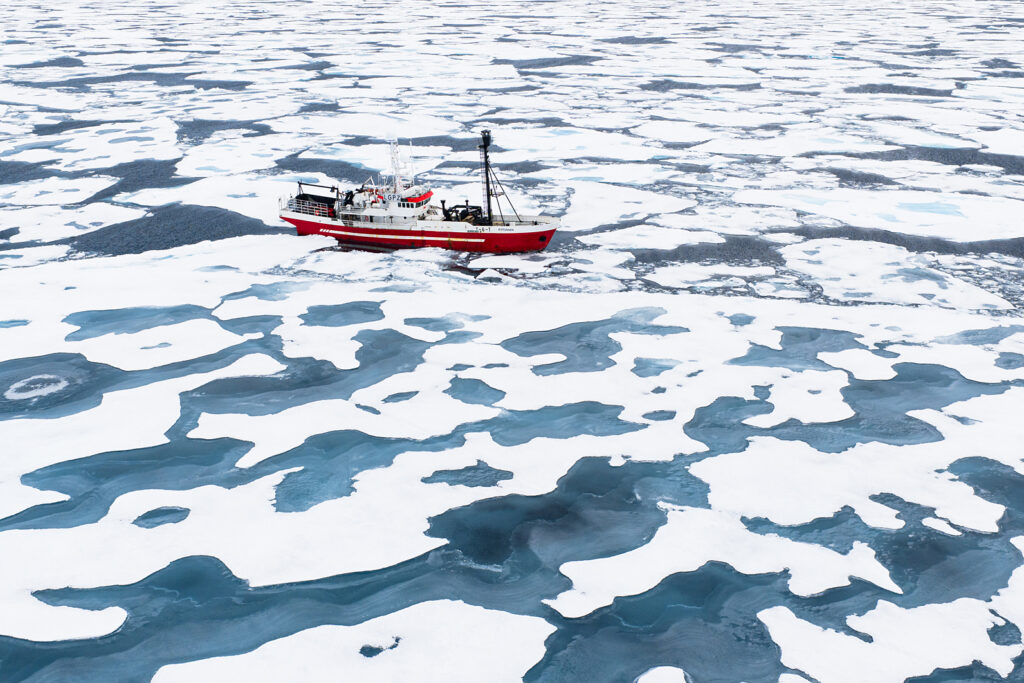
June Pack Ice Expedition#2
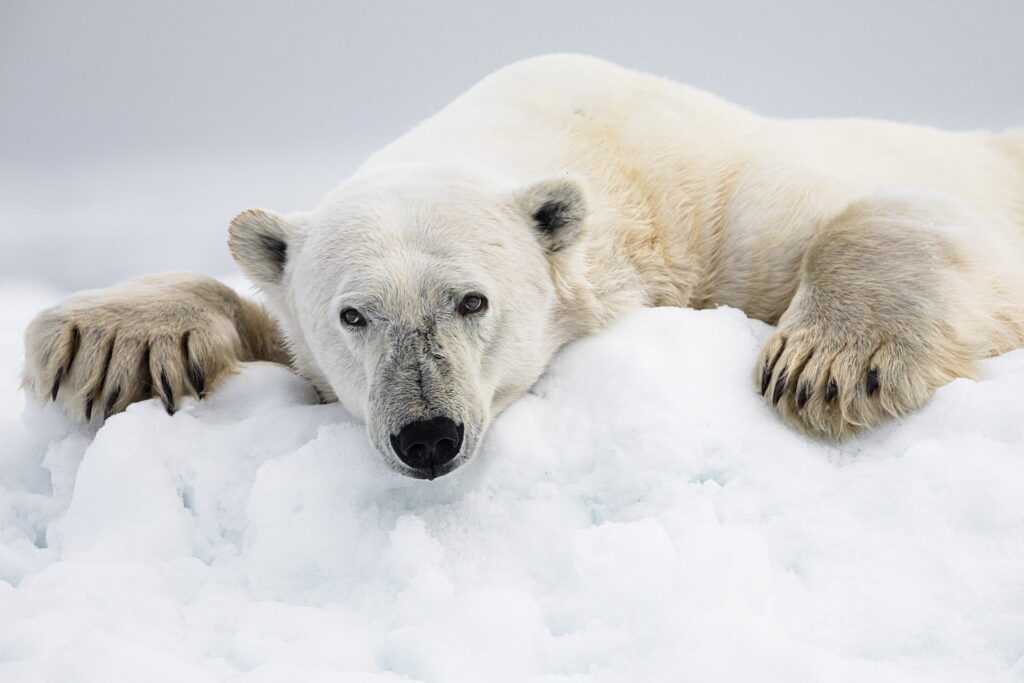
Pack Ice Expedition South Svalbard
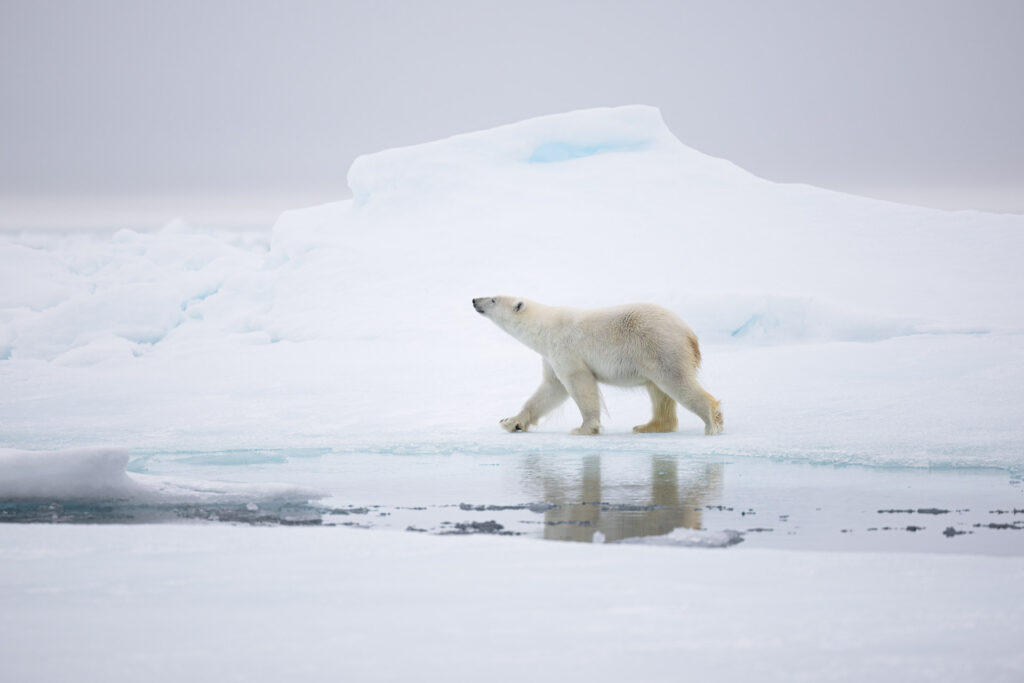
Svalbard June-July Pack Ice
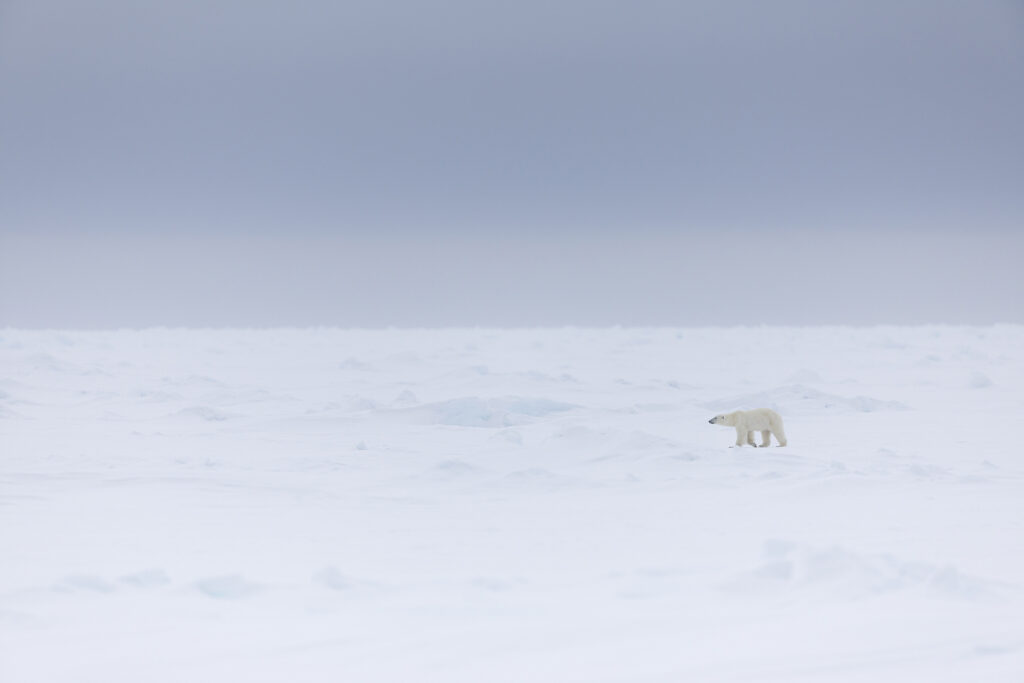
Svalbard July Pack Ice