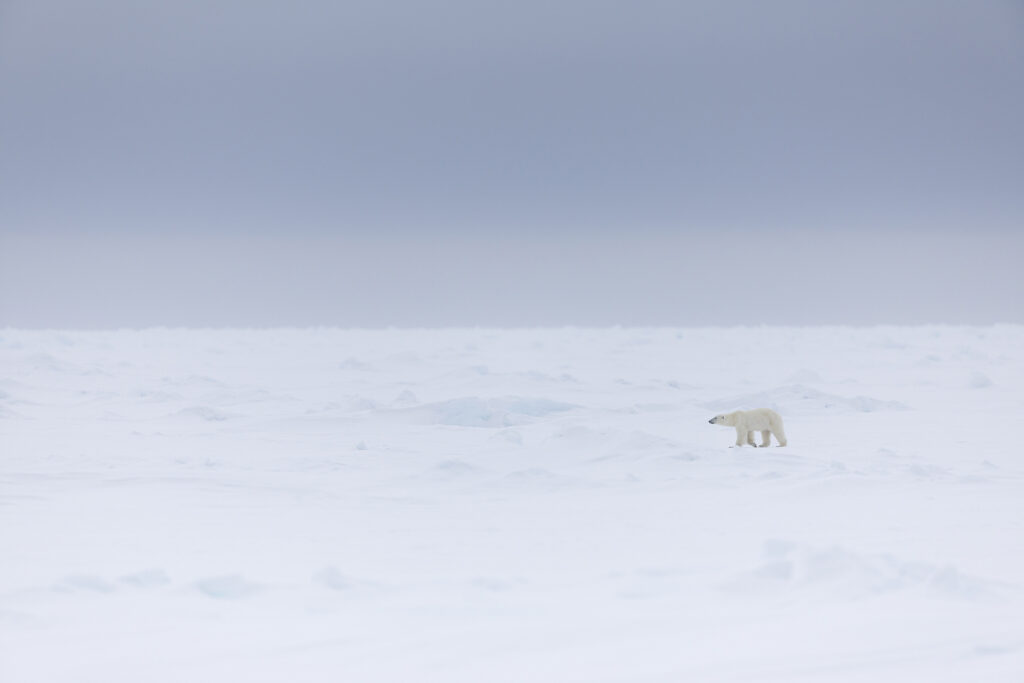
The return of the Walrus on Svalbard

The Walrus on Svalbard is one of the species we see more and more in Svalbard. The populations are growing after being almost exterminated back in the 1960`s. The story about the return of the Walrus on Svalbard is an exciting story proving that conservation work works. Walruses is also a possibility for our travelers to add great experiences to their journey with us by being close to such personalities Walruses can be.
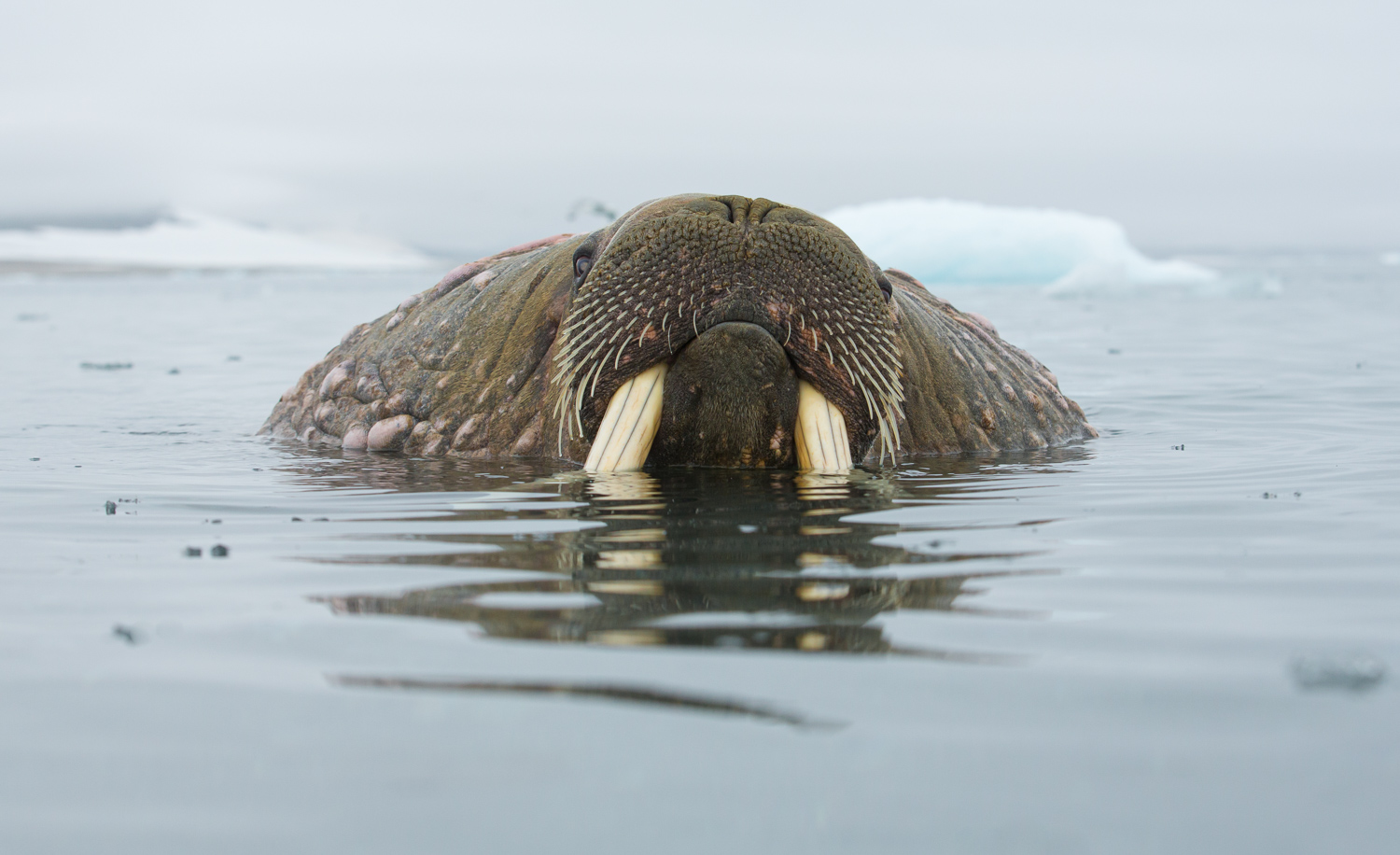
return of the walrus

There are two populations of walrus. The Atlantic walrus with approximately 25,000 and the Pacific walrus with 200,000. They feed on invertebrates, mussels, clams, crabs and soft corals. They have been recorded being capable of diving to a shocking depth of up to 500 meters but generally don’t go much deeper than 30 meters. The bigger the animal the deeper the dive due to the ability to hold more oxygen in their body. These deep dives beyond 100 meters are not routine behavior as they generally spend time on ice flows where it´s shallower so that they can feed easily while the ice also provides a place for them to rest.

On Svalbard the Walrus population was almost gone before 1970. After a total protection the population has slowly increased. The only "haul out" was at the small island Moffen north of Spitsbergen back then.
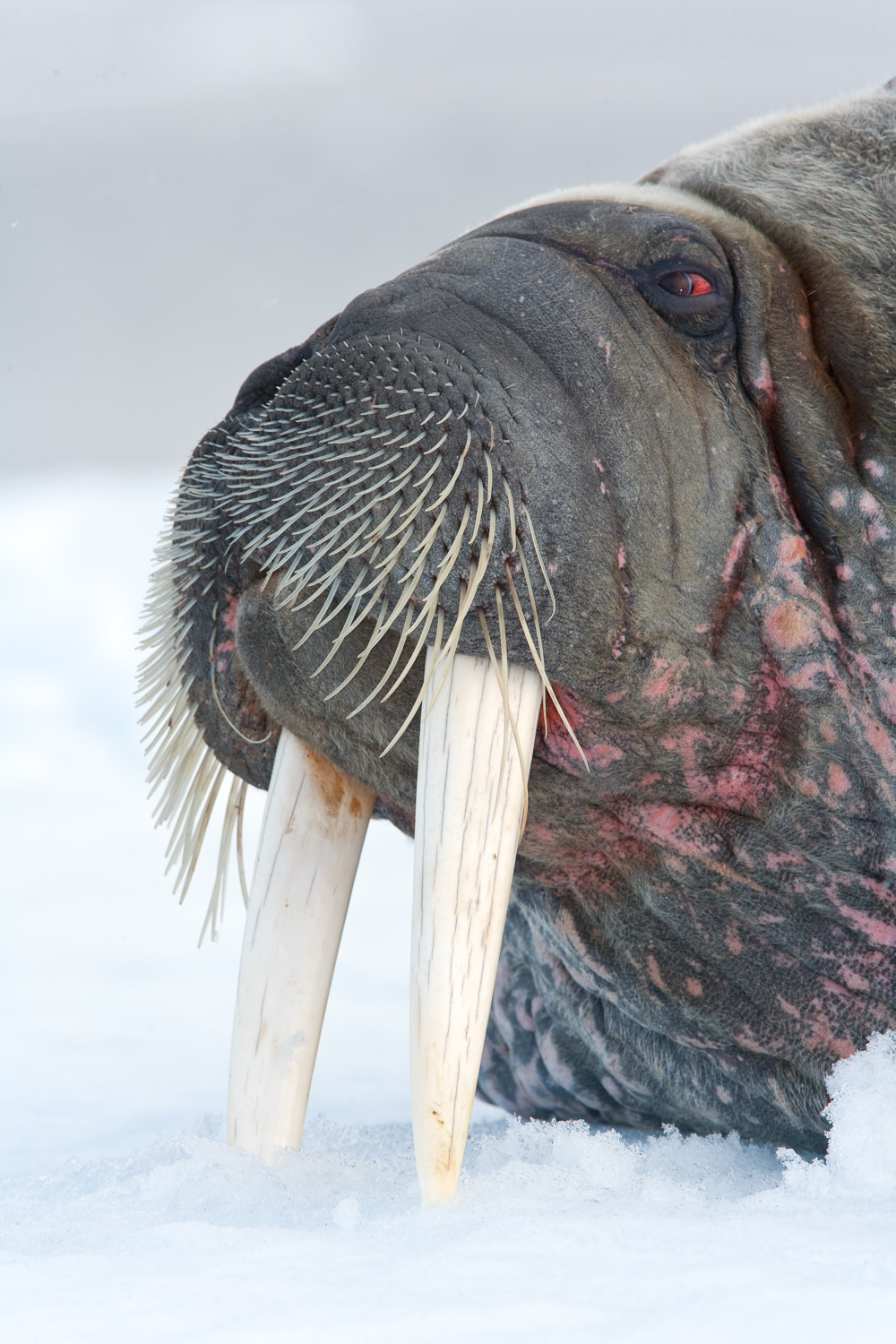
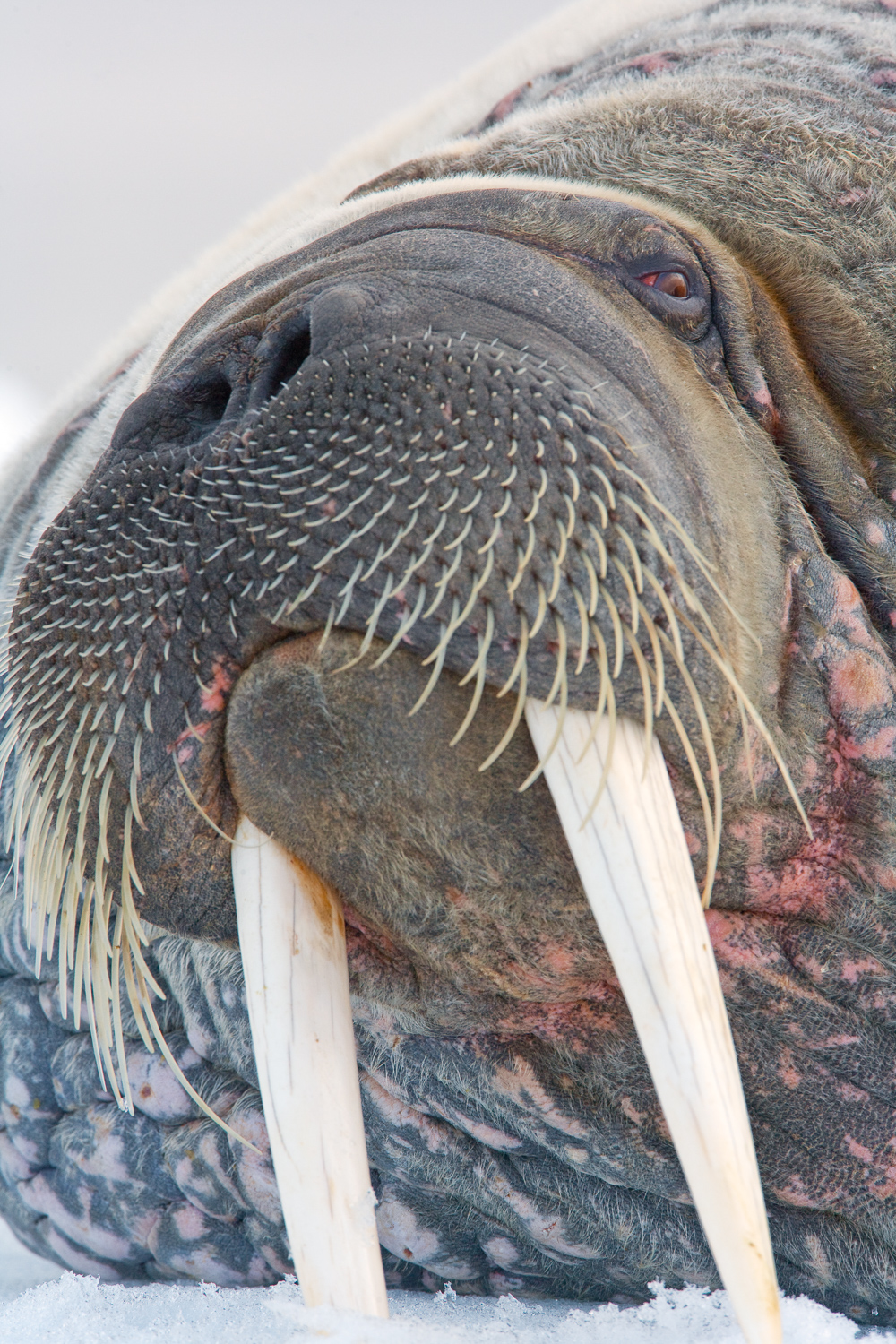
The "haul-outs" for Walruses has a increased number of animals

The average life span of a walrus is 40 years. Their tusks grow continually, the older the walrus the longer the tusks, growing up to 3 feet in length and are considered to be their canine teeth.  They use their tusks to haul themselves out of the water and to break breathing holes in the ice when needed. They are often seen using their tusks violently to maintain or claim territory. It is difficult to watch this aggressive behavior with the tusks and the injuries they cause as a result.
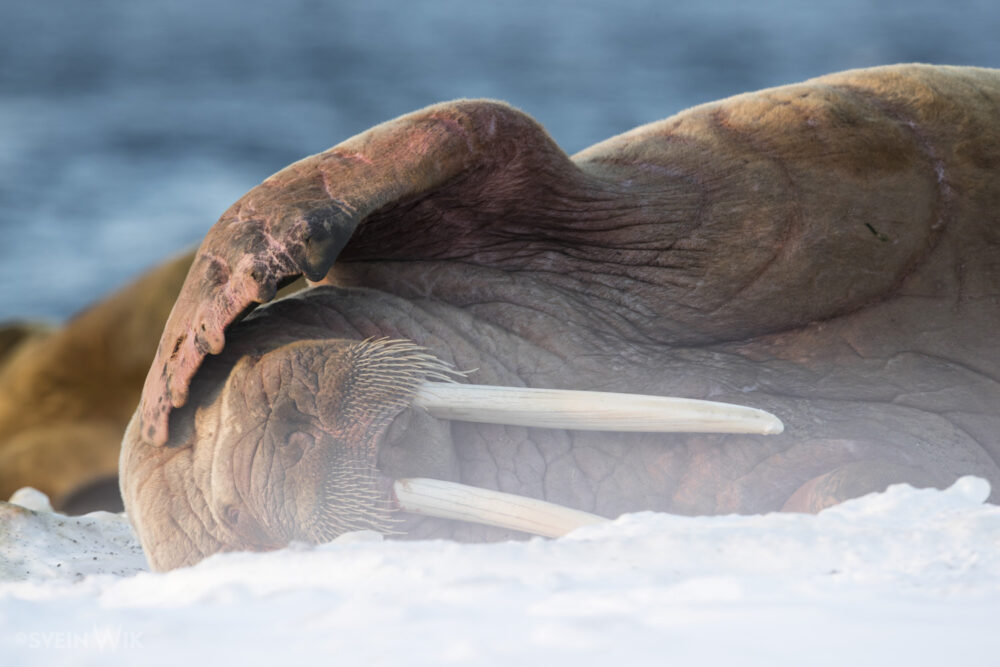
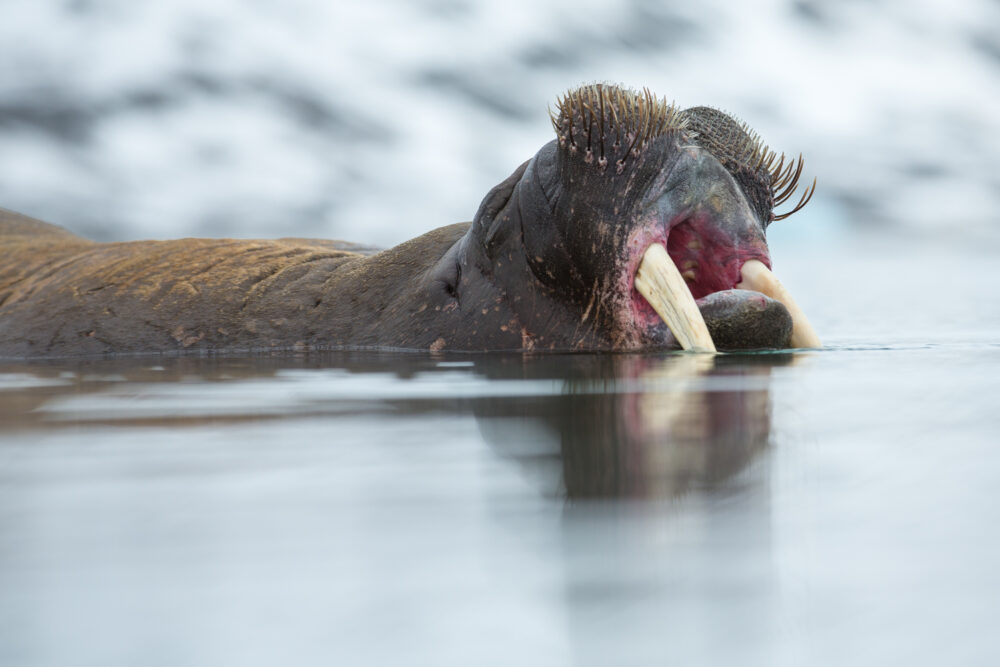
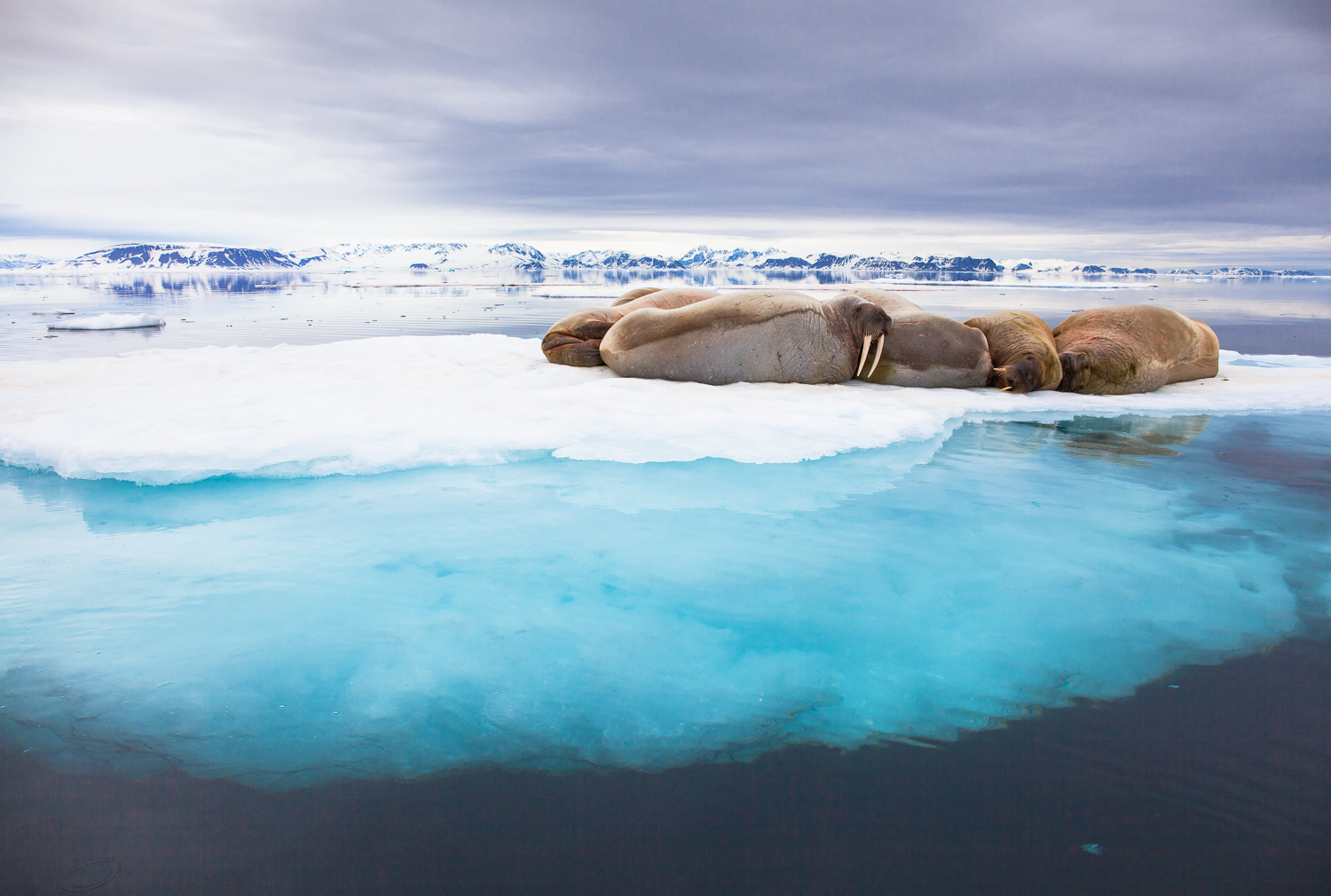
With the disappearing sea ice in late summers, the walrus is more commonly “hauling out” in massive numbers onto land. This overcrowding behavior is a part of the animals behavior and also a dangerous risk to the walrus as they are easily frightened or surprised by anything. Especially polar bears due to research done on Svalbard. The scent of a predator or perhaps a plane over head or an unfamiliar noise, will cause them to panic and rush to the water by the tens of thousands, weighing up to 1500 kilograms, trampling smaller walruses to death.
return of the walrus
Read about Svalbard seasons

We in Arctic Wildlife Tours appreciate the Walruses populations increasing every year. The huge animals has their own personality and we love encountering these animals in the wild as much as any other wildlife on Svalbard. Their return onto Svalbard is also a fantastic story about a heavily hunted animal can return into the wild as soon as it is protected from hunting. Around the world hunting is the worst thing humans can do to our wildlife. Nothing is as devastating to wildlife populations as hunting in a short term.
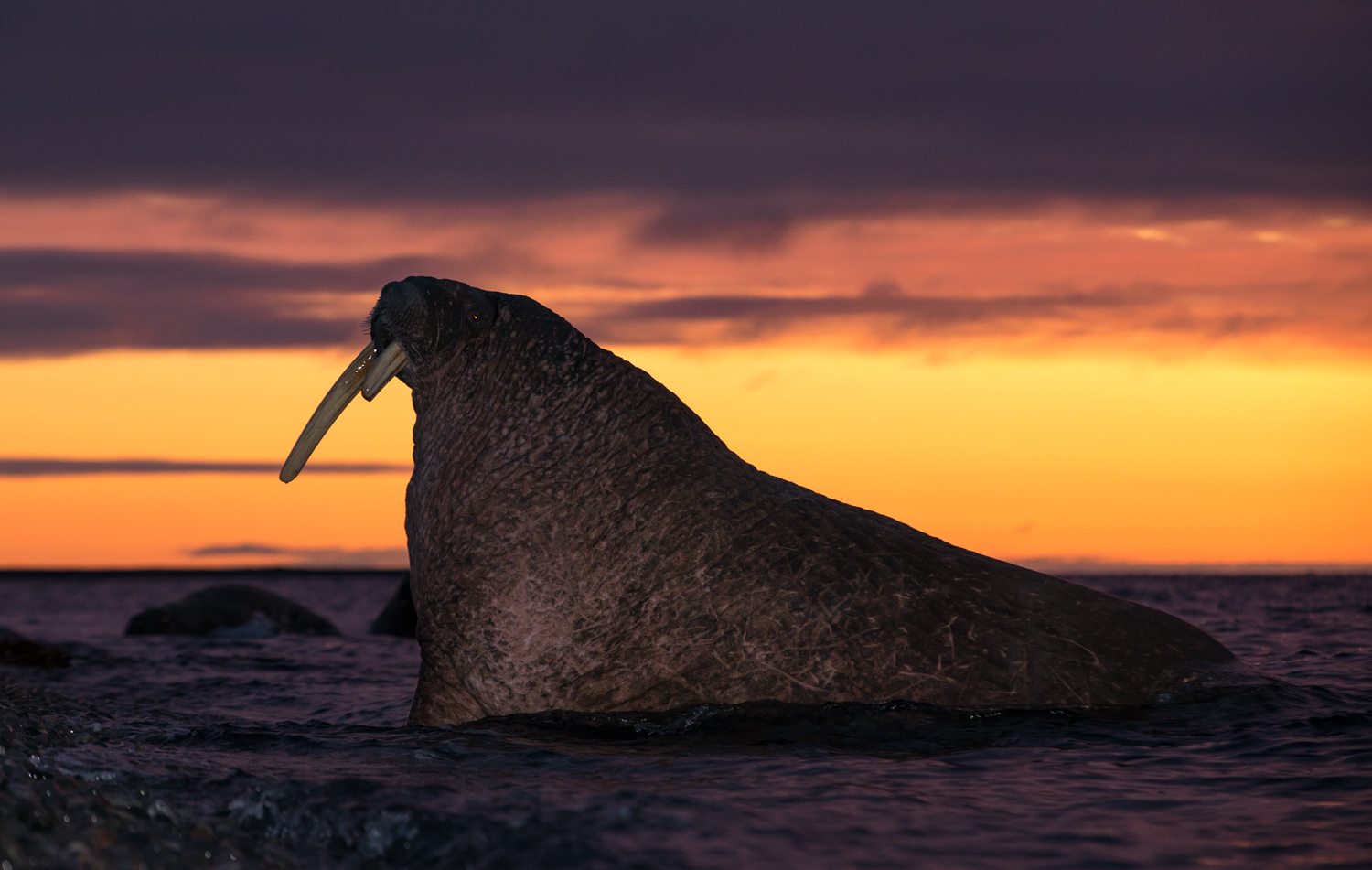
A walrus during sunrise. This is only something we can see in September.

In 2011 the walrus was considered to be endangered but in 2017 it was decided they do not require protection as threatened or endangered, however their behavior of “hauling out” is proof they are trying to adapt to less ice and survive the warming effects of the sea. They are now listed as “vulnerable.”  With very little ice to rest on they are forced to swim long distances to land for rest and to feed in the shallows around the shores rather from ice flows.

Currently only Native Americans are allowed to hunt walruses, their survival in the past was threatened by overhunting. Hunting walrus was banned in 1952 and total protection is still enforced in Svalbard today. They were almost extinct in Svalbard in 1952 with possibly only 100 animals left. After 60 years of protection the population has increased but is still considered small with approximately 5000 walruses.

Today a increasing population creates a food source for other arctic wildlife as arctic foxes and polar bears. Every year we find dead walruses around the islands of Svalbard, and always polar bears and foxes are attracted to the carcasses. Probably a huge food source for such wildlife.
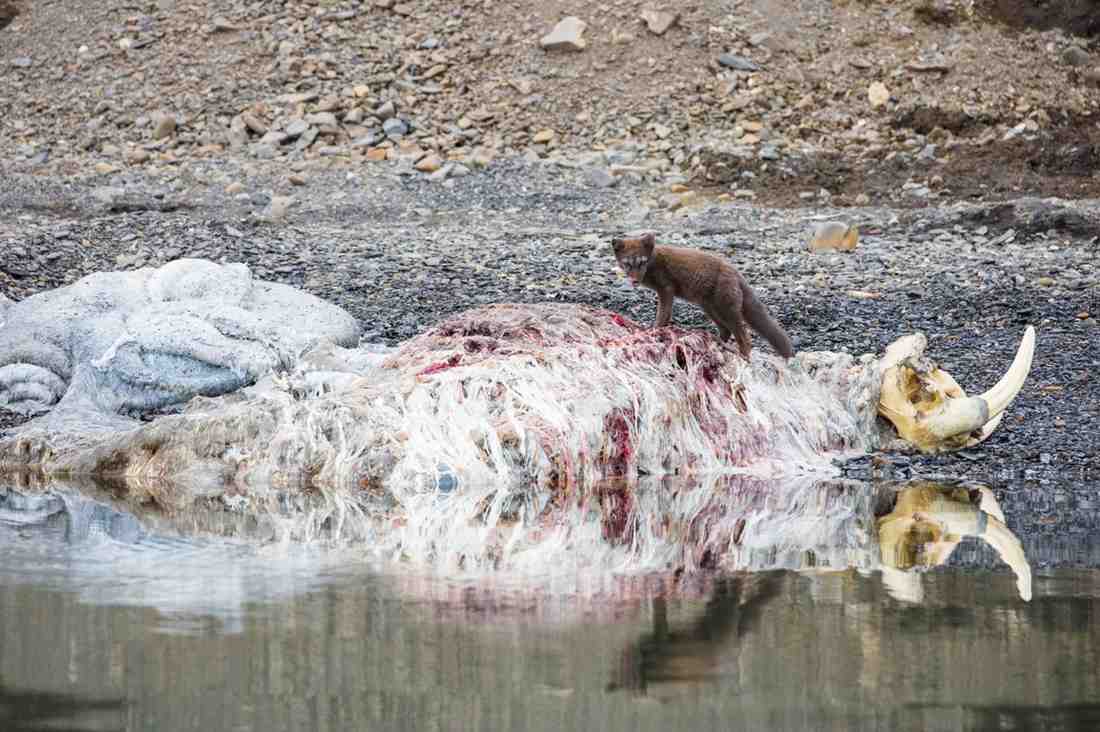
Arctic Fox (Blue Fox) feed on a dead Walrus

Upcoming Svalbard Tours

svalbard winter landscapes
Svalbard

Svalbard winter landscapes

10. Apr 2026 - 18. Apr 2026
Svalbard winter landscapes offers some of the most spectacular scenery imaginable. The dramatic landscape, composed of towering mountains, deep fjords, sweeping valleys, and the vast expanse of the Arctic Ocean, makes this region an extraordinary destination for exploration and photography. At this time of year, the landscapes themselves are the primary focus, though wildlife is never far from sight. The dramatic setting is enhanced by the presence of polar bears, which can often be seen traversing the scenic terrain or drifting across ice floes. These encounters provide breathtaking photographic opportunities in the heart of the Arctic wilderness.
Spots available 1 SPOT AVAILABLE FOR A FEMALE
Season Early Season, Winter season
Duration 9 days
svalbard winter photography expedition
Svalbard

Wildlife photography expedition

01. May 2026 - 09. May 2026
Wildlife photography expedition in May, the region already experiences the constant daylight of the midnight sun. While clouds may lessen the intensity of the sunlight, they also create a variety of patterns and possibilities for photography. Still we will see some of the coolers from sunsets and sunrises. Even though the nights can remain very cold, it is possible to observe wildlife resting and hunting on the ice-covered fjords or within the pack. In this bright, winter-like environment, participants can enjoy remarkable wildlife encounters in truly picturesque, icy conditions by joining our Svalbard photo expedition. Our wildlife photography expeditions represent the ultimate in polar exploration at any time of year.
Spots available 2 SPOTS (One double cabin)
Season Early Season, Winter season
Duration 8 nights / 9 days
polar bear photography
Svalbard

Pack Ice expedition Svalbard

28. Jun 2026 - 07. Jul 2026
In early summer, our Svalbard tours experiences a unique transformation as some of the snow melts, yet large areas remain covered by drift ice. The pack ice is still relatively close to the Svalbard islands, making it easily accessible for exploration and wildlife observation. This period offers remarkable opportunities to witness Svalbard's diverse wildlife. Polar bears, walruses, whales, seals, and a variety of birdlife are particularly active, increasing the chances of close wildlife encounters. The movement of these animals makes this an ideal time for wildlife enthusiasts and photographers alike.
Spots available 5 SPOTS AVAILABLE
Season Main season, Peak season
Duration 9 nights/10 days
k1a2385
Svalbard

Pack Ice expedition Svalbard

07. Jul 2026 - 21. Jul 2026
Svalbard is renowned for its rich diversity of Arctic wildlife. The most iconic resident is the polar bear, often referred to as "The King of the Arctic." These magnificent creatures traverse the frozen seas and rugged coastlines in search of seals and sustenance. It is not uncommon to witness polar bears caring for their cubs in this challenging yet thriving environment. While they may occasionally be spotted along the shores, the drifting pack ice is their true habitat. Remarkably, over 60% of the polar bear population migrates into the pack ice during early summer, making this region vital for their survival. This pack ice expedition Svalbard will be a unique chance for extraordinary wildlife encounters.
Spots available 1 SPOT AVAILABLE FOR A MALE
Season Main season, Peak season
Duration 15 days
peak season expedition svalbard
Svalbard

Peak season expedition Svalbard

21. Jul 2026 - 31. Jul 2026
Another expedition into the pack ice. We will visit the spectacular bird cliffs, walrus haul-out places, do landings and cruise into the pack ice north of Svalbard. More than 60% of the Polar Bear population migrate into the pack ice during early summer. In late July the bird cliffs are still full of wildlife. We also will visit Walrus haul-out places on land and maybe some interesting places for Arctic Foxes along with other wildlife. The Svalbard Archipelago is surrounded by the Arctic Ocean, and its not far before we start entering what we call “the pack ice”. This is a magical environment in many ways. It is also the real home of the polar bears and other wildlife like seals, walruses and whales. Join us for this peak season expedition Svalbard.
Spots available 2 SPOTS AVAILABLE
Season Main season, Peak season
Duration 11 days
svalbard photography expeditions
Svalbard

Polar Bear adventures in the pack

30. Aug 2026 - 09. Sep 2026
The Adventure of Navigating the Pack Ice. The pack ice can be likened to a nameless continent, composed entirely of drifting ice and teeming with wildlife. It stretches across vast expanses of the ocean, with the ice moving according to ocean currents, tides, and winds. Navigating these icy areas requires patience, but the rewards are great when wildlife is spotted. Especially will this be a Polar Bear Adventure. Some of the expedition will be dedicated to exploring the Islands of Svalbard. In late August and early September, the light in this region becomes more colorful. Sunsets and sunrises return after the long, sunlit summer, transforming the landscape with vibrant hues.
Spots available 4 SPOTS AVAILABLE
Season Autum season, Main season
Duration 10 nights/11 days