Is an Arctic Adventure Tour Right for You? Assessing Fitness, Comfort, and Expectations
Is an Arctic adventure tour right for you? You know, when people picture an Arctic adventure, they imagine it’s a bit like a chilly sightseeing trip. All hot chocolates and pretty views from behind a window. I’m here to let you in on a little secret: the reality is so much more rewarding. Now, you…
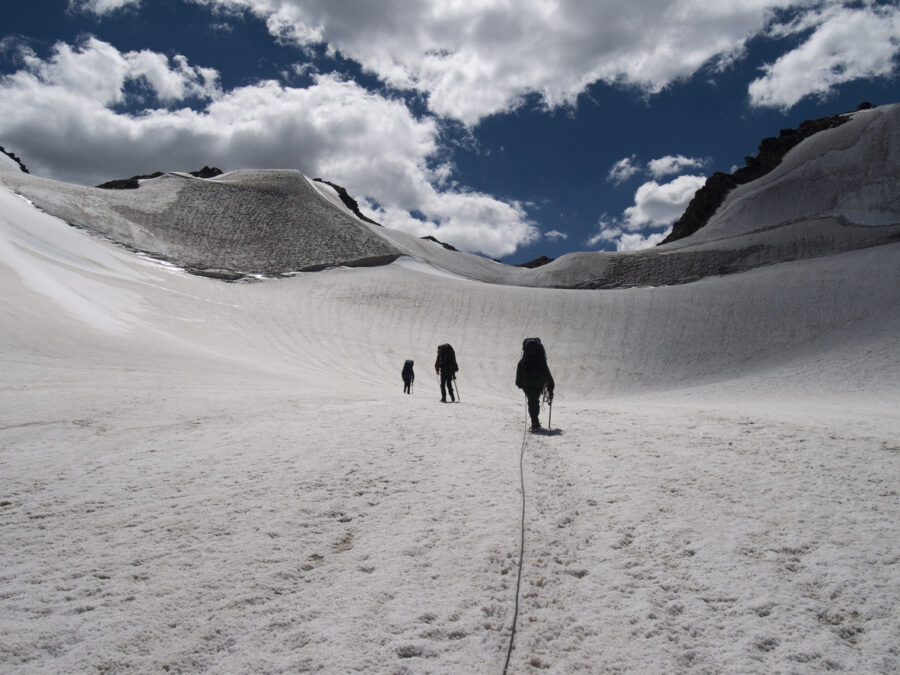
Is an Arctic adventure tour right for you? You know, when people picture an Arctic adventure, they imagine it’s a bit like a chilly sightseeing trip. All hot chocolates and pretty views from behind a window. I’m here to let you in on a little secret: the reality is so much more rewarding.
Now, you might have heard about Antarctic cruising, which is often seen as a more gentle, ‘light adventure’. And it’s brilliant in its own right. But a proper Arctic expedition? It’s not something you just book and turn up for. It’s a journey you train for and earn.
Think of it this way: you can’t simply hop off the plane and expect to be hauling a heavy sled across the ice or spending a full day trekking in crampons. It demands a level of fitness that you build over months. I’ve seen it time and again. The folks who thrive out here are the ones who’ve put in the work back home. We’re talking about building the strength to pull that sled, the muscular endurance for long, active days, and a solid aerobic base that keeps you going when the temperature drops.
It’s not just about brute force, either. It’s about your stamina, your wind… your overall fitness plays a huge part in how much you enjoy the experience. Medical issues on polar expeditions often surprise first-timers.
When you’re not fighting for breath, you’re free to truly absorb the breathtaking silence of a glacier or the thrill of spotting a polar bear track in the snow. Many worry about seasickness, yet it ranked only fifth on the list of medical complaints. Your preparation needs more than just motion sickness tablets.
In this piece, we’ll look at what it takes to be ready for an Arctic adventure tour. We’ll cover everything from tyre-dragging exercises that simulate sled pulling to the mental strength needed for extreme conditions.
Understanding the Demands of an Arctic Adventure Tour
A trip to the Arctic isn’t just another vacation. It’s a test of human endurance.
Physical and environmental challenges
The Arctic throws unique physical demands at you that few places can match. Winter rules as the main season with constant sub-zero temperatures. Even summer temperatures in the Arctic Circle barely reach 10°C. It also faces more extreme weather patterns, as polar lows (intense marine storms) create strong winds and rogue waves that challenge even well-equipped expeditions.
Your body works overtime in these conditions. Basic tasks take much more effort in intense cold. The deep, compacted snow forces you to drag a pulk sled weighing over 20kg, a test of strength and endurance. Experienced adventurers say that “by the end of each trip, I’d let go of myself completely… I was a pure animal, with the thoughts and instincts of a polar bear“.
Physical readiness has these requirements:
- Getting on and off zodiac boats confidently
- Having flexibility to take deep steps when disembarking
- Keeping balance on icy terrain
- Building strength to carry equipment
Mental and emotional resilience needed
Arctic expeditions often fail due to mental collapse rather than physical breakdown. One Arctic explorer noted that expeditions usually fall apart because “people’s minds weren’t in the right place”. The mix of loneliness, monotony, and constant cold creates a psychological battleground that demands incredible fortitude.
Everyone feels vulnerable here. A traveller described their 75-mile trek across the Finnmarksvidda plateau as creating “an acute sense of my own tininess” while feeling “desperately dependent on my fellow travellers”.
Successful Arctic adventurers create mental hygiene routines, use techniques, and stick to rigid daily structures. You retain control by staying true to yourself instead of putting up a false front, which helps you add value to your team.
Why preparation matters more than you think
Poor preparation doesn’t just spoil your enjoyment, it can threaten your life. Arctic expeditions need specific pre-trip planning unlike tropical holidays. Medical emergencies in remote areas often require private charter aircraft for evacuation, which can get pricey without proper insurance.
Your training should focus on Arctic conditions. Regular gym workouts aren’t enough. You need activities that mirror what you’ll face, like tyre-dragging workouts that simulate pulk-pulling. Good preparation means hiking comfortably with a 6-8kg pack and building multi-day endurance.
Weather delays happen often in the Arctic. Smart travellers add buffer days to their schedule to account for possible weather delays in getting home from the Arctic.
A well-prepared Arctic adventure turns from a potential ordeal into an extraordinary experience. Respecting the environment through proper preparation lets you appreciate its raw, magnificent power fully.
Training Your Body for Arctic Conditions
Getting your body ready for Arctic conditions needs specialised training that goes beyond regular gym workouts. I’ve guided many travellers across frozen landscapes, and I can tell you that standard fitness routines won’t prepare you for an Arctic adventure tour. Your training should match the exact challenges you’ll face on the ice.
Tyre dragging and sled simulation
Tyre dragging is good for explorers because it simulates pulling a heavy sled across ice. This exercise builds the exact muscles you’ll need for Arctic expeditions, particularly in your back, buttocks, legs and thighs.
You’ll need a sledge harness (like those used by polar explorers), a rope about 2.5-3m long, and one or two car tyres to start this training. Hook the tyre to your harness and walk for 2-3 hours at a time. The weight and duration should increase gradually as your expedition date gets closer. You should include tyre dragging sessions at least three times weekly six weeks before your journey.
Most adventurers find tyre pulling more enjoyable than basic road running, despite feeling awkward at first. The training is also easier on your body since the load stays on the ground behind you instead of weighing down your back.
Strength and endurance routines
Arctic expeditions need three physical capabilities: maximal strength to pull heavy sleds, muscular endurance for long days, and aerobic capacity for sustained effort. Your training plan should cover all three through periodization: alternating between strength, cardio, and endurance phases.
Professional Arctic guides recommend these key exercises:
- Back squats – Powers leg drive essential for sled pulling and skiing
- Deadlifts – Engages the posterior chain needed for powerful forward motion
- Farmer’s carries – Builds grip and trapezius strength crucial for holding poles
- Kettlebell swings – Boosts hip extensor power needed for locomotion
TRX training and callisthenics will improve your functional strength. Add aerobic training through mountain biking or distance running to build general fitness. This training schedule should continue even if your work involves heavy physical labour.
Balance and core stability drills
A stable core is vital when crossing uneven Arctic terrain while pulling heavy loads. Without it, you’ll waste energy and risk getting injured. Your training should include exercises that target your abdominals and back muscles from all angles: upper, lower, and side.
TRX mountain climbers, Russian twists, and planks work well for core strength. Balance-specific training like squats on a BOSU ball and exercises with lateral resistance bands help with glute and hip stabilisation. These improve pelvic stability, which you’ll need for long-distance trekking.
A complete training schedule should progress weekly. Begin with 2 hours of aerobic fitness plus 30 minutes of core stability in week one. Build up to 4 hours of aerobic work as your expedition approaches. The final week should be lighter to ensure full recovery before departure.
This training builds mental toughness along with physical readiness. Each tyre-dragging session in cold rain or early mornings develops the resilience you’ll need in real Arctic conditions.
Building Mental Toughness for the Arctic
Physical training gets lots of attention, but mental resilience ended up determining success on an Arctic adventure tour. Many people believe exceptional physical fitness makes an expedition succeed. The quality of participants’ minds actually makes the real difference. Let me share lessons from experienced polar explorers about mental preparation.
Visualisation and mindset routines
Your mindset shapes how you experience extreme environments. Research with Norwegian residents reveals better wellbeing throughout winter for those who view it positively.
The positive wintertime mindset grows stronger with latitude. People in Svalbard (78°N) showed more positive attitudes than Tromsø residents (69°N). Oslo residents (60°N) displayed the least positive outlook.
Effective visualisation techniques include:
- Mental rehearsal of daily routines and potential challenges
- Framing cold and darkness as opportunities rather than threats
- Adopting what Norwegians call koselig—finding cosiness and comfort in winter conditions
Handling discomfort and monotony
The Arctic creates unique psychological challenges. The 24-hour daylight removes natural differences between day and night. Days often merge into monotonous whiteness. You need strategies to curb this sameness.
Rigid daily routines prove significant because they “take the emotion out of it”. A set schedule leaves no time to dwell on discomfort.
Accepting conditions instead of fighting them helps preserve mental energy. You have to learn how to make the best of the situation.
Staying motivated in extreme conditions
Successful Arctic adventurers develop an “Expedition Mindset.” This means staying adaptable to changing circumstances while finding positives during difficult times. Science confirms strong connections between mindset and achievement.
Altruism becomes surprisingly important for group expeditions. Thinking of others will distract you from the self-centredness that develops in confinement.
The process matters more than the destination. Celebrate small daily victories instead of fixating on the final goal. Mental toughness goes beyond enduring hardship. It helps you find genuine joy in one of Earth’s most extraordinary environments.
Gear, Nutrition, and Recovery Essentials
The right gear and nutrition are the foundations of any successful Arctic adventure tour. Even the fittest and mentally prepared adventurers won’t survive without proper equipment and food. Let me share what I’ve learned about staying comfortable and energised from my years of guiding in the frozen North.
Layering and cold-weather gear tips
The golden rule of Arctic clothing is simple: layer, layer, layer! Your clothing system should include:
- Base layer: Choose merino wool or synthetic fabrics that pull moisture away from your skin. Cotton will work against you, it loses insulating properties when wet and makes you colder. You should pack multiple base sets to alternate while one dries.
- Mid layer: This becomes your insulation fortress. Polar fleece works amazingly here, and wool makes an excellent alternative. You’ll need both a medium-weight fleece (200-300 weight) to use on standard days and a lighter option during active periods.
- Outer layer: This acts as your shield against wind, rain, snow and sea spray. Pick waterproof, windproof shells with pit zips that help you ventilate. Make sure they’re roomy enough to fit your layers underneath.
Your extremities need insulated waterproof gloves, a wool hat that covers your ears, and waterproof boots rated to at least -40°C.
High-calorie nutrition for cold climates
Arctic environments need extraordinary caloric intake, between 5,000-8,000 calories daily based on your activity level. Without good planning, you’ll run out of energy at the worst possible time.
You should pack energy-dense, freeze-resistant foods. Chocolate, nuts, halva, and dried fruits give you portable energy and won’t freeze solid. Expedition cake made mostly from dry fruit and nuts has minimal water, so it tastes good even at low temperatures.
Adding electrolytes, vitamin D, and multivitamins helps offset the limited nutritional variety. Each litre of water from melted snow needs electrolytes to replace lost minerals.
Rest, sleep, and hydration strategies
Your sleep becomes a lifeline in Arctic conditions. You need to insulate your body from the freezing ground with two layers of closed-cell foam pads. A three-layer sleeping bag system works best: a vapour barrier to reduce moisture, a down mummy bag, and a synthetic outer bag.
Staying hydrated can be tricky in cold environments. You lose much water through respiratory vapour in cold, dry air, even though you sweat less. Keep your water close to your body to prevent freezing, and add flavouring to encourage drinking.
Safety, Risk Management, and Emergency Planning
Safety isn’t a mere priority on an Arctic adventure tour. It’s your lifeline. My years of guiding expeditions across the frozen north have taught me that knowing safety protocols can mean the difference between an amazing adventure and a disaster.
Understanding Arctic safety protocols
Arctic environments need specific safety awareness that goes way beyond the reach and influence of typical travel spots. You must always treat polar bears, walruses, and muskoxen with respect as they pose real dangers.
Your group must carry appropriate deterrents while travelling in polar bear territory. Hiking over glaciers requires specific skills with ropes, crampons, and ice axes, so never attempt this without a trained guide.
What to do in case of injury or illness
Medical facilities are nowhere near accessible in these regions, so knowing simple wilderness first aid becomes crucial. Every expedition needs a complete first aid kit that includes treatments for frostbite and hypothermia.
Altitude sickness symptoms in mountainous areas require immediate descent of 600-1,200 metres. Anyone experiencing carbon monoxide poisoning (a risk in enclosed heated spaces) should move to fresh air right away.
Communication and evacuation procedures
Note that communication satellites in geostationary orbit don’t effectively cover Arctic regions. Search and rescue teams could take several days to arrive, especially when you have bad weather.
Your expedition must register its itinerary with local authorities before departure. Emergency evacuations can get pricey, proper insurance with medical evacuation coverage isn’t optional.
Wrapping Up: Arctic Adventure Tours
Arctic adventure tours are unlike any other travel experience. Antarctic cruises need modest fitness levels, but true Arctic expeditions require exceptional preparation: both physical and mental. Your body needs specific training that mirrors polar conditions, especially when you have to practise tyre-dragging exercises to simulate pulling sleds across ice. Building maximal strength, muscular endurance, and aerobic capacity are all essential.
Your mental strength will determine if you succeed in the Arctic’s extreme environment. Seasoned adventurers know this well that even the strongest bodies give up when minds aren’t ready.
Your gear choices can mean the difference between comfort and misery. Layering remains your best defence against brutal cold, while high-calorie nutrition powers your extraordinary energy needs. Many people overlook proper hydration, but it needs careful attention since cold, dry air drains your body’s moisture faster than you’d expect.
Safety protocols should be automatic before you step on Arctic terrain. Limited communication, wildlife threats, and extreme isolation mean you must rely on yourself more than anywhere else on Earth. So, proper insurance with evacuation coverage isn’t just recommended. You absolutely need it.
You might wonder if Arctic adventure tourism is right for you after reading this piece. Without doubt, these expeditions ask more of you than regular holidays ever could. But people who commit to proper preparation find something extraordinary, a deep connection with one of Earth’s last true wilderness frontiers. This challenging environment will test your limits and reveal strengths you never knew you had.
Arctic adventures change people deeply. Beyond the physical challenge of it all lies something more valuable. There’s a genuine change that stays with you long after you return to your regular routine. This makes months of preparation worth it.
The Arctic waits for those ready to meet its challenge. If you’ve got your heart set on seeing polar bears in the wild or witnessing the stunning midnight sun, my best advice is to book well ahead. Booking early isn’t just about securing a spot. It’s about making sure you get the perfect cabin with the best view for your once-in-a-lifetime experience.